
Pricing


AI writer

Taplio
MCP V2
New: Engage tools
Taplio MCP V2 now available, try it out
Your AI can now comment and reply for you. It finds the posts worth engaging, drafts in your voice and queues them on your Taplio account. Nothing posts until you confirm.

LinkedIn profile examples that actually work


16
min read

 Open in ChatGPT
 Open in Claude
 Open in Perplexity
Key Takeaways
- LinkedIn profile examples that work: Five copyable patterns, one per persona, each leading with a specific claim instead of a job title, such as the B2B SaaS founder headline "Helping RevOps teams cut reporting time by 70% | Founder and CEO at Ledgerly".
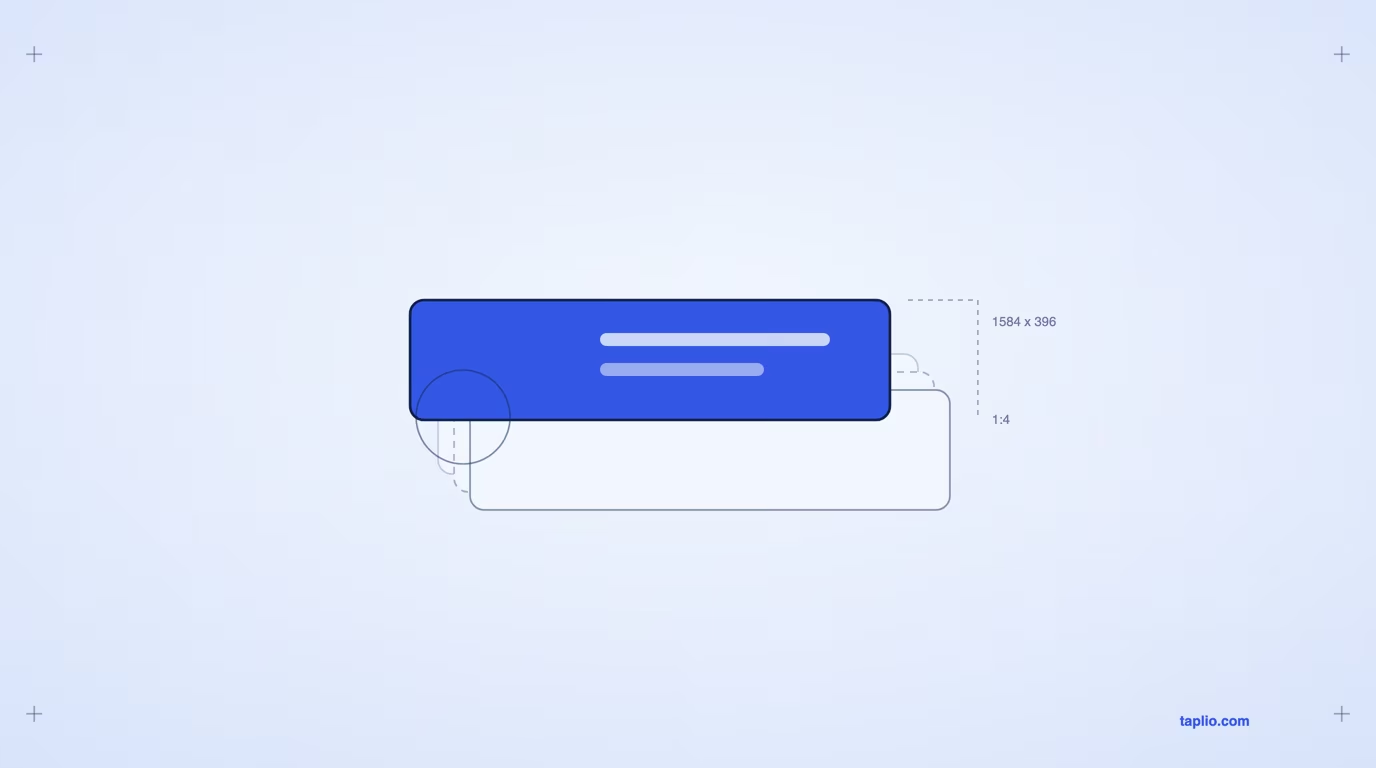
- The mechanism: Rewrite four zones in the order a reader scans them, a headline naming a result or specialty, an About opening that is one real sentence instead of a summary, a Featured section carrying clickable proof, and a banner whose bottom left corner stays clear of the photo.
- The number that decides: Each of the five examples pairs its headline with exactly 3 Featured items, for instance a named case study, a funding announcement and a talk, all independently checkable by a reader.
- Check before copying: Whether the headline names an outcome not a title, whether the About opening could belong to anyone in the field, whether Featured holds proof or generic reposts, whether the banner fights the photo, and whether the public URL still ends in default digits.
- Decision rule: Use the lead-with-a-number pattern only if a real quotable result exists, the narrow-service pattern for one specific fix, the reframe pattern when switching industries, and the technical pattern when recruiters search by keyword.
A LinkedIn profile example only helps you if you can actually copy it. This page shows five complete profiles, each built around one working pattern, so you can see exactly what a founder, a consultant, a career switcher, an engineer and an agency owner each say in their headline, their About opening and their Featured section, not just be told to "write a strong headline." Every profile below is fictional but the copywriting choices behind it are real and repeatable.
What makes a LinkedIn profile example worth copying
A profile is worth copying when you can point to the exact line doing the work, not just admire the whole page. Every profile below was built around one specific move: a headline that leads with an outcome, an About section that opens with a real sentence instead of a job description, or a Featured section that proves the claim instead of repeating it. Screenshotting a profile you like and copying the tone is not the same skill, and it rarely transfers, because the tone was never the part doing the work.
Four signs separate a profile worth copying from one that just looks tidy:
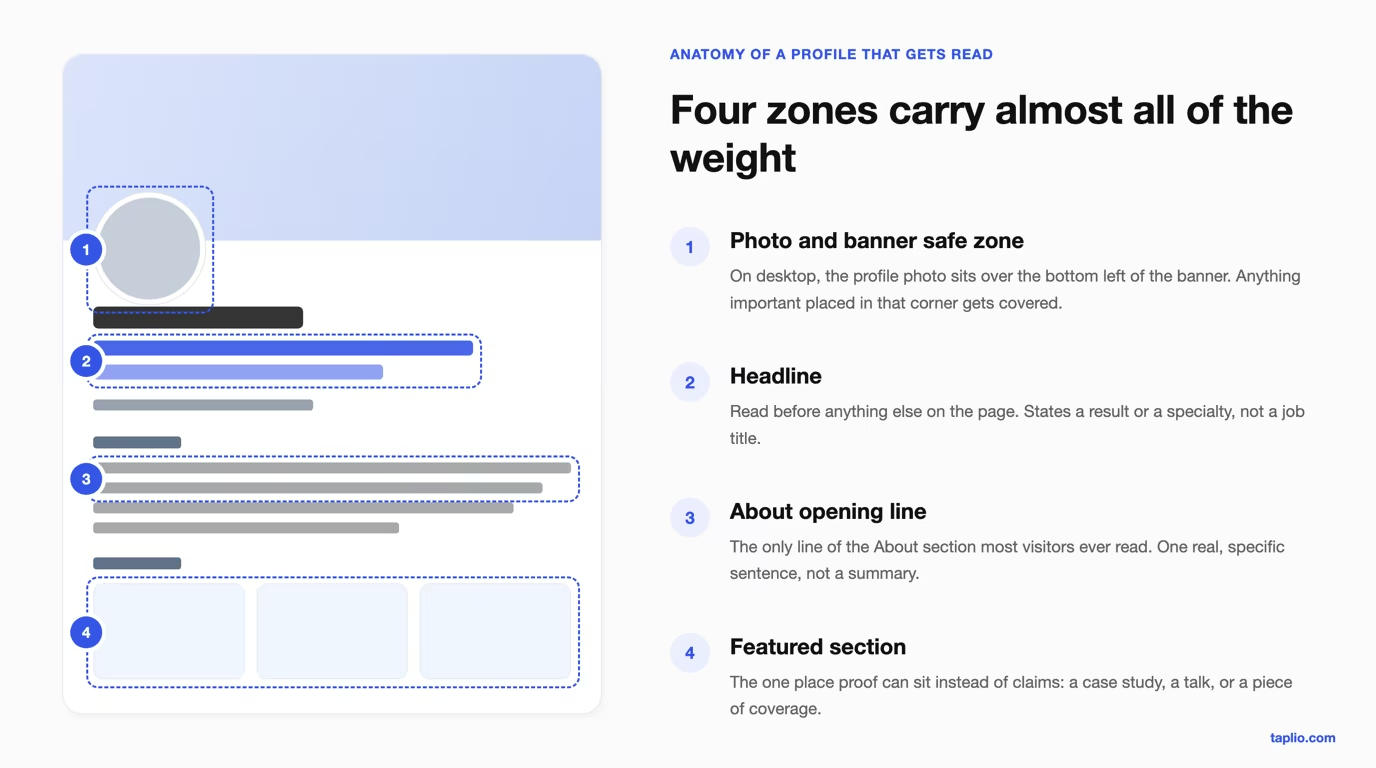
- The headline names a result or a specialty, not a title. A reader should learn what you are good at before they learn what your business card says.
- The About opening is one real sentence, not a summary. If the first line could belong to anyone in your field, it is not doing its job yet.
- The Featured section carries proof, not reposts. A case study, a talk, a piece of coverage, something a reader can click and verify.
- The photo and banner do not fight each other. On desktop, the profile photo sits over the bottom left of the banner, so anything important in that corner gets covered.
The reason most profile swipe files do not help is that they collect finished pages rather than the decision behind each line. A headline that works for a consultant with one named service will not survive being pasted onto a generalist marketer's profile, because the thing making it work is the narrowness, not the wording. Read each of the four signs as a question about your own page, then change the single line that fails it.
The four zones below carry almost all of the weight on a LinkedIn profile. Get these four right and the rest of the page, skills, experience, recommendations, mostly takes care of itself, because a reader who is already convinced by the top of the page skims the rest looking for confirmation, not new reasons to leave.
5 LinkedIn profile examples that actually work
Each profile below is one persona demonstrating one pattern. Names, companies and every figure inside these profiles are illustrative, the structure and the copywriting choices are the part to copy. Read the caption under each one for the trade-off that pattern costs you, because none of these five work for every situation, and copying the wrong one for your circumstances reads as false confidence rather than credibility.
Pay attention to what each headline leaves out as much as what it includes. A strong headline is not the longest one on the page, it is the one that answers a reader's first question, what do you do and why should I care, then stops.
The B2B SaaS founder
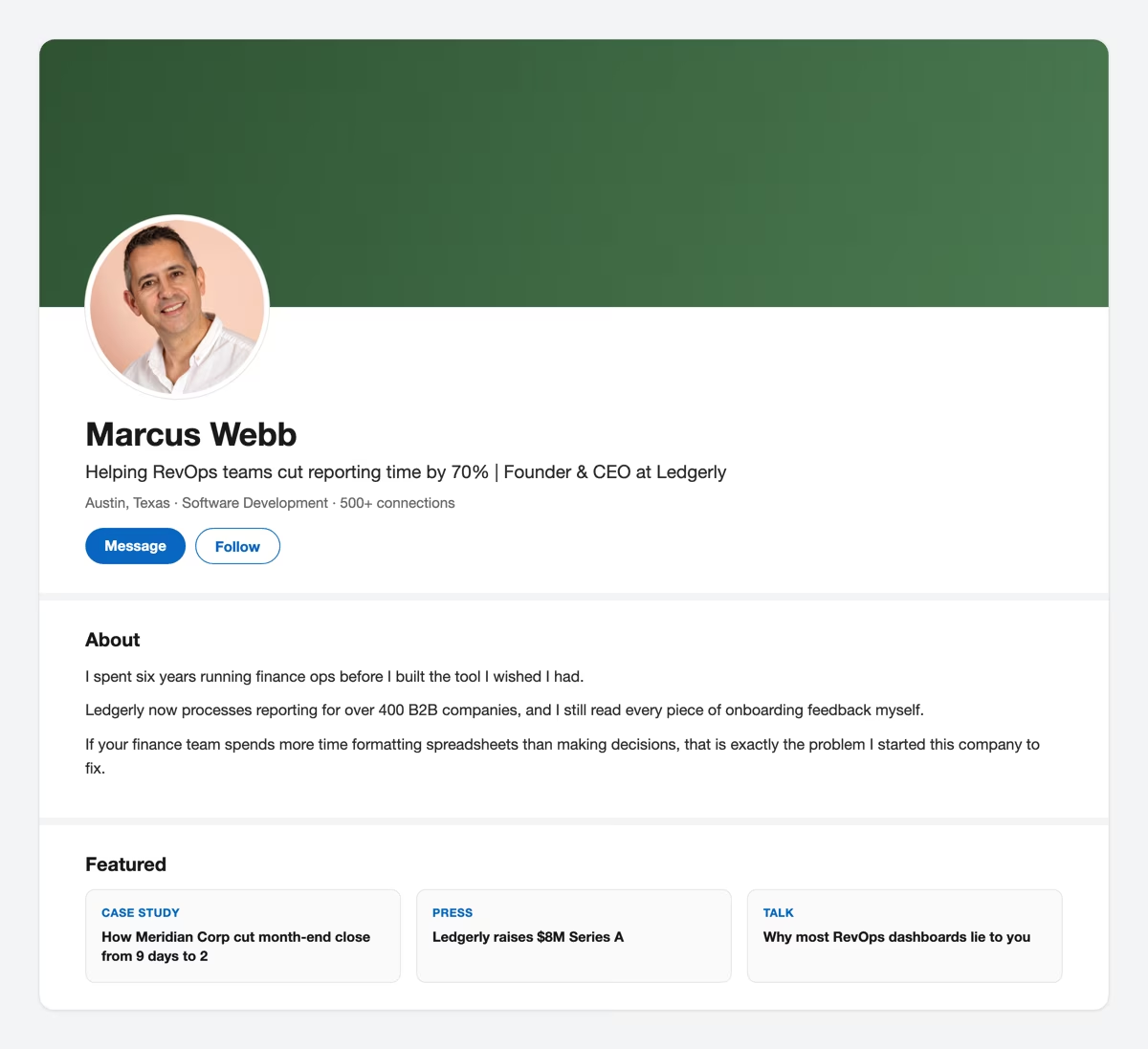
Marcus leads with a number instead of his title. His headline names the exact metric his buyer cares about, cutting reporting time by 70 percent, before it ever says "Founder." His About opening skips the origin story cliches and states the problem in one sentence a finance lead would recognize immediately, then backs it with a real customer count.
The copy, in full, so you can adapt it line by line:
- Headline: "Helping RevOps teams cut reporting time by 70% | Founder and CEO at Ledgerly"
- About, opening line: "I spent six years running finance ops before I built the tool I wished I had."
- Featured: one named case study, one funding announcement, one talk.
Why it works: the headline answers "what do you do" and "should I care" in the same six words. The About opening names the audience, finance leads, instead of describing the product in the abstract. The Featured section backs the metric with a named case study and a funding announcement, both independently checkable.
What it trades away: the headline says nothing about the company's stage, its category or its funding, so a reader who cares about any of those has to scroll. That is the cost of leading with one number. It also ties the whole first impression to a single figure, so the day a customer result beats 70 percent, the headline has to move with it.
The freelance consultant
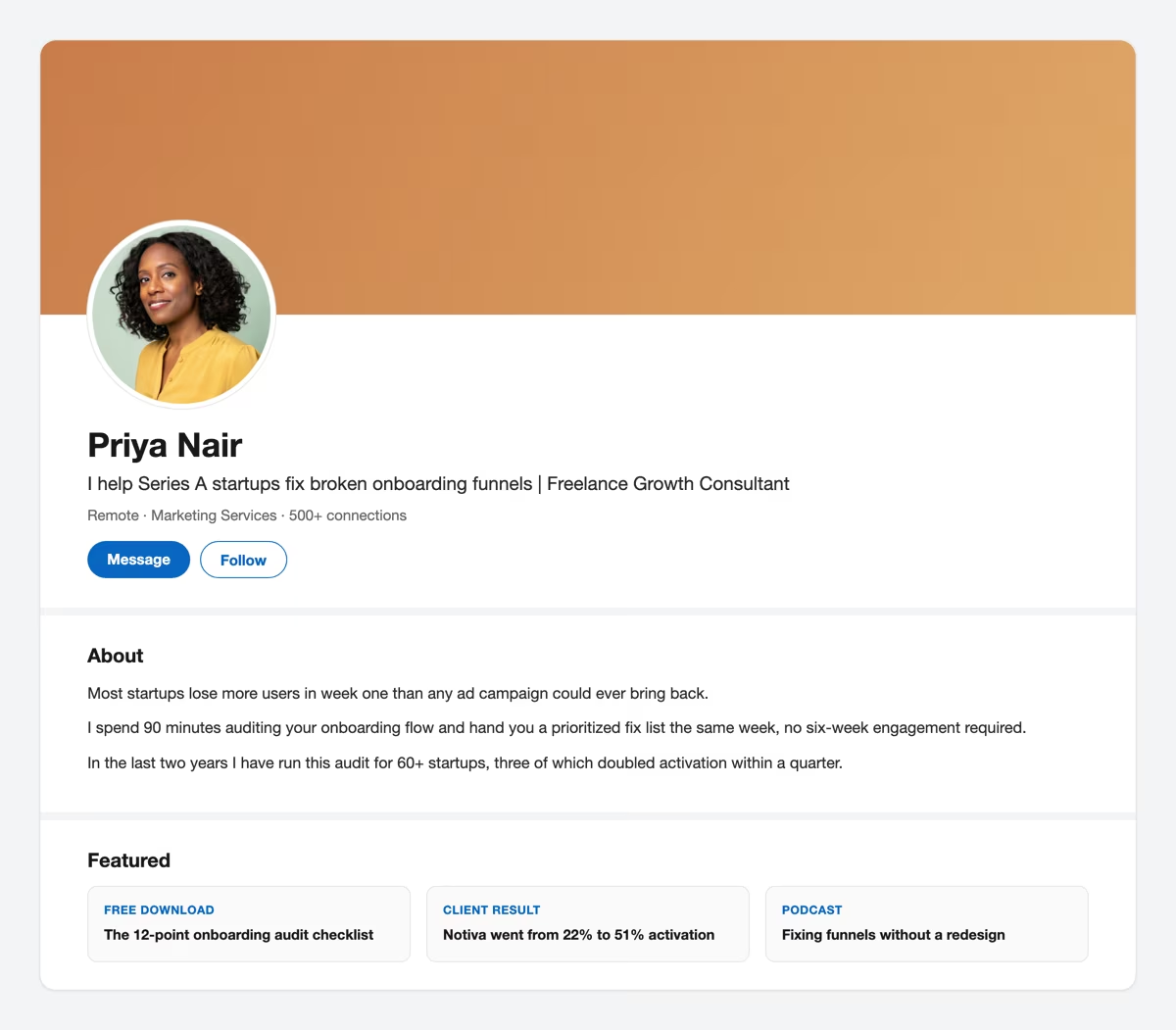
Priya's headline names the specific fix she sells, broken onboarding funnels, and the buyer she sells it to, Series A startups, instead of a generic "Growth Consultant" title. Her About opening states the exact deliverable and the turnaround time, which is what a freelancer's buyer is actually trying to figure out in the first five seconds on the page.
The copy, in full:
- Headline: "I help Series A startups fix broken onboarding funnels | Freelance Growth Consultant"
- About, opening line: "Most startups lose more users in week one than any ad campaign could ever bring back."
- Featured: a free checklist, a named client result, a podcast appearance.
Why it works: naming both the problem and the buyer in six words does the qualifying that a discovery call usually has to do. The About opening states a concrete deliverable, an audit with a fixed turnaround, instead of a vague promise to "help you grow." The Featured section leads with a number a prospect can compare against their own funnel.
What it trades away: naming Series A as the buyer tells a pre-seed founder and a public company that this profile is not for them, and both will keep scrolling. Priya also commits in public to a 90 minute audit and a same-week turnaround, an expectation she has to meet on every engagement. A narrow promise is easier to sell and harder to walk back.
The job seeker switching industries
David is moving from teaching into UX research, a transition with no matching job title to lean on. His headline states both identities plainly, former teacher, now UX researcher, and his About opening reframes eight years of classroom management as the research skill it actually is, rather than apologizing for the career change or downplaying the years spent teaching.
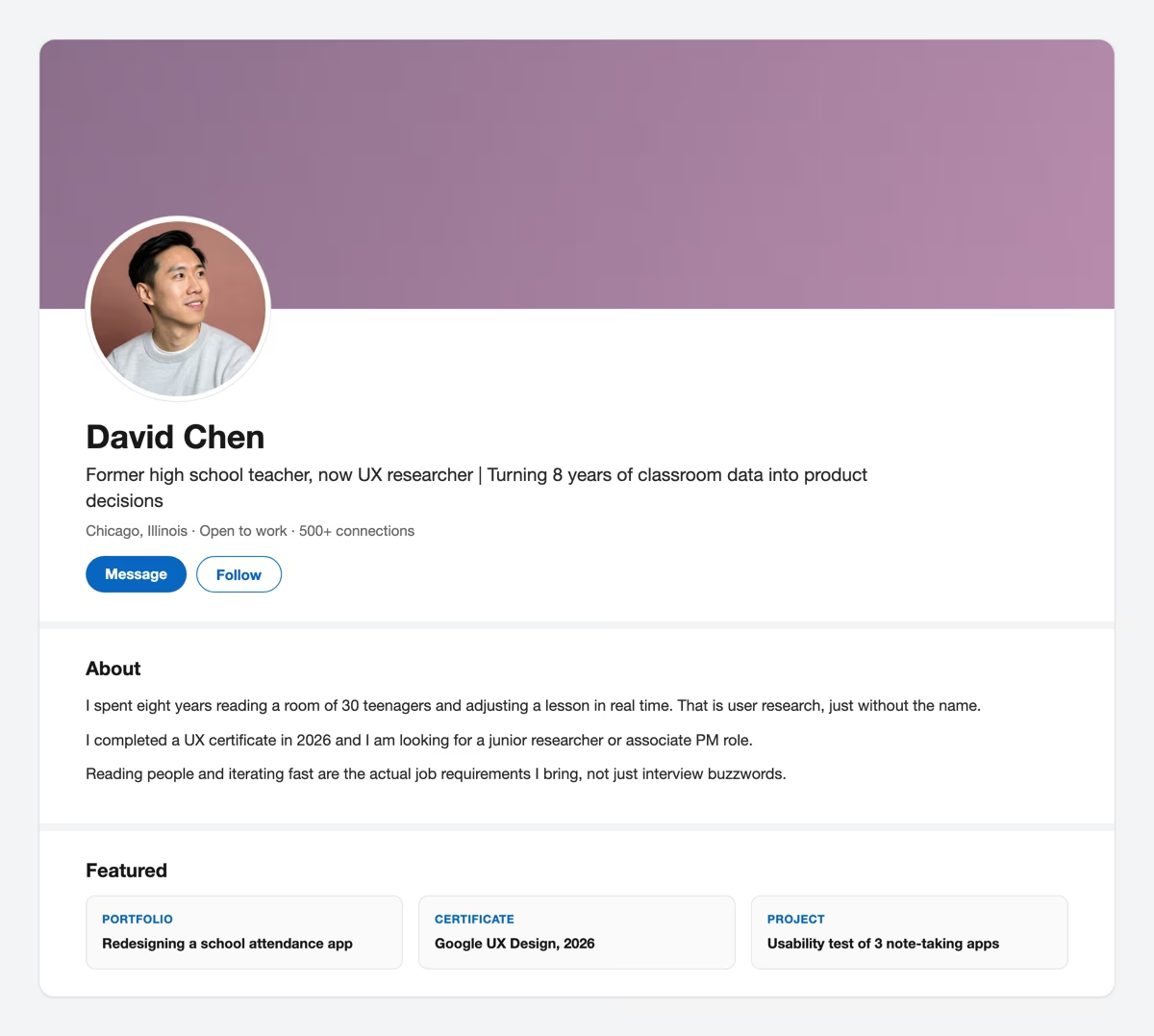
The copy, in full:
- Headline: "Former high school teacher, now UX researcher | Turning 8 years of classroom data into product decisions"
- About, opening line: "I spent eight years reading a room of 30 teenagers and adjusting a lesson in real time. That is user research, just without the name."
- Featured: a portfolio case study, a certificate, a self-directed usability project.
Why it works: naming the old title and the new one in the same line stops a recruiter from filtering the profile out at a glance. The About opening translates a specific classroom behavior, reading a room and adjusting in real time, into the exact language a UX job description uses. The Featured section carries a portfolio project, which a career switcher needs more than a resume line does.
What it trades away: putting the old job first means every recruiter registers the career change before they register the new skill, and some will screen on it. David accepts that in exchange for the recruiters who read the second half of the line and understand what eight years of classroom observation actually is. Hiding the switch was never an option, the work history states it two scrolls later.
The technical IC
Fiona is a staff engineer who is not trying to become a manager, and her profile does not pretend otherwise. Her headline names the hard, specific problem she solves, Postgres at 10 million-plus rows a day, in language another engineer would actually search for. Her About opening skips soft skills entirely and goes straight to a measurable result from her last two roles.
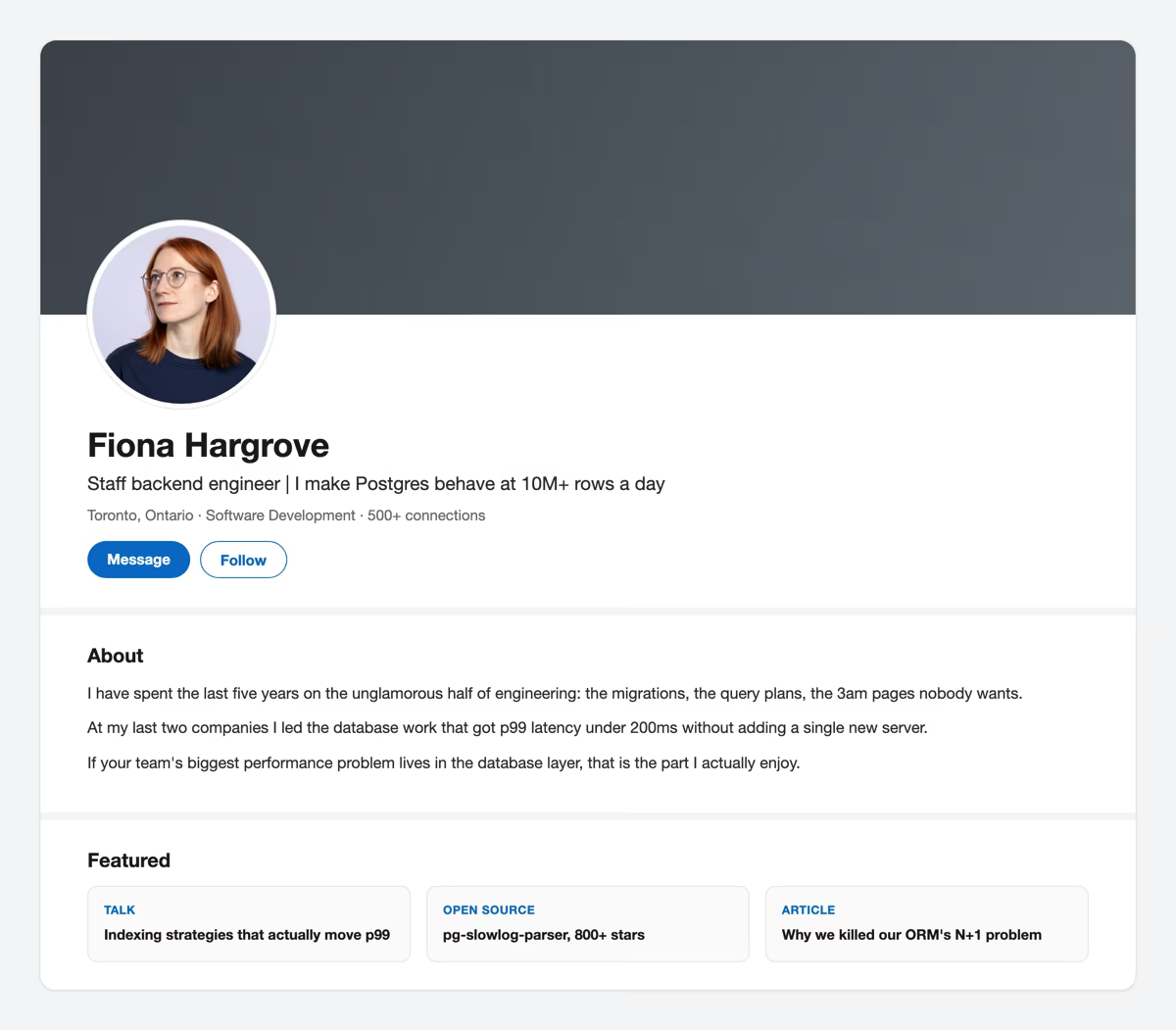
The copy, in full:
- Headline: "Staff backend engineer | I make Postgres behave at 10M+ rows a day"
- About, opening line: "I have spent the last five years on the unglamorous half of engineering: the migrations, the query plans, the 3am pages nobody wants."
- Featured: a conference talk, an open source project, a technical write-up.
Why it works: the headline is written for a peer engineer searching, not a generalist recruiter scrolling, and the specificity is the filter, not a bug. The About opening leads with a latency number instead of a list of languages and frameworks. The Featured section carries a conference talk and an open source project with a real star count, both something a hiring engineer would actually check.
What it trades away: an agency recruiter scanning for management potential reads this as someone with no interest in running a team, which is accurate and intended. The line also binds Fiona to one database. Move to a stack that does not use Postgres and the headline stops being true, so a pattern this specific needs rewriting more often than a vague one.
The agency owner
Renata's headline states her agency's exact client range, brands doing 5 million to 50 million dollars in revenue, which pre-qualifies the size of client who should be reaching out before a single message is sent. Her About opening includes one detail, that she still sits in on every new client's first quarter, that a small studio cannot say and a huge agency would not bother saying.
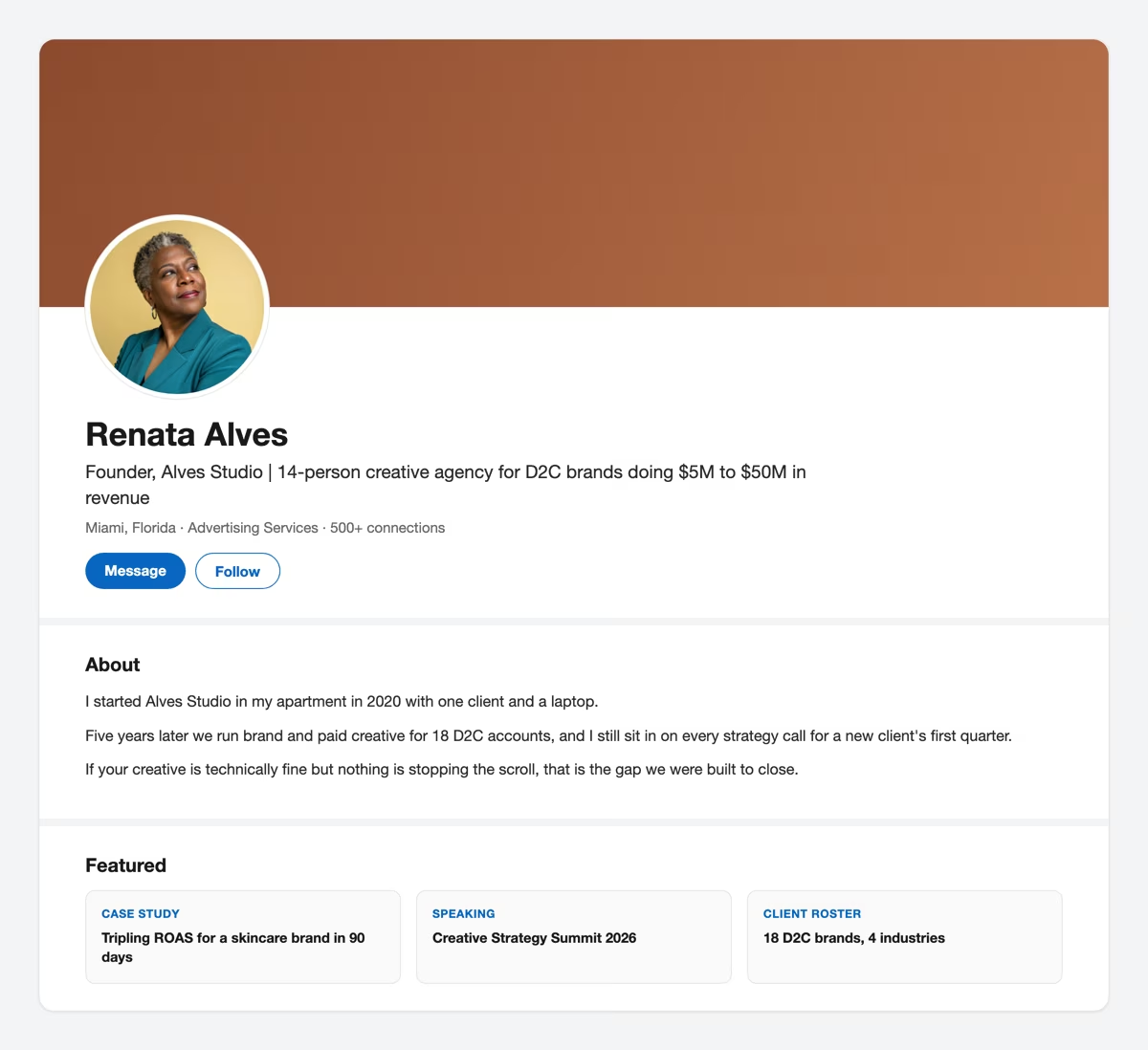
The copy, in full:
- Headline: "Founder, Alves Studio | 14-person creative agency for D2C brands doing $5M to $50M in revenue"
- About, opening line: "I started Alves Studio in my apartment in 2020 with one client and a laptop."
- Featured: a quantified case study, a speaking credit, a client roster summary.
Why it works: stating a revenue range does the qualifying work a sales call usually does, before the call happens. The About opening's one specific detail, personally sitting in on a new client's first quarter, signals hands-on involvement in a way "client-focused" never could. The Featured section pairs a quantified case study with a speaking credit, proof aimed at two different kinds of buyer.
What it trades away: publishing a team size and a client revenue band invites comparison on both. A brand doing 80 million dollars in revenue may read 14 people as too small, and a 2 million dollar brand will not reach out at all. Renata is also making a promise, sitting in on every new client's first quarter, that gets harder to keep with every hire.
Which pattern fits your situation
These five patterns are not interchangeable, and picking the wrong one for your situation reads as a mismatch immediately. Match the pattern that fits what you actually have to prove right now, a result, a narrow service, a transferable skill, a technical specialty, or scale, and skip the ones that would ask you to claim something you cannot back up yet. You can always move to a stronger pattern once you have the proof it needs.
| Persona | Pattern | Best for | What it costs you |
|---|---|---|---|
| B2B SaaS founder | Lead with a number, not a title | Founders selling to a data-literate buyer | Needs a real, quotable result to lead with |
| Freelance consultant | Lead with the outcome you deliver, stated narrowly | Consultants pitching one specific fix | Fewer, more qualified inquiries |
| Career switcher | Reframe past experience as a named transferable skill | Job seekers with no matching job title | Vague reframing reads as padding |
| Technical IC | Lead with the hard problem you solve | Specialists recruiters search for by keyword | Skimmed past by recruiters outside your specialty |
| Agency owner | Lead with scale and a concrete client range | Agencies pitching bigger accounts | Filters out smaller clients who cannot afford the range |
Most people can honestly place themselves in two or three rows at once. When that happens, pick the row matching the proof you can back up today, not the one that sounds most impressive, and revisit the headline once you have the result the stronger pattern needs. A founder with no case study yet can borrow the consultant row's narrow-service framing until the metric exists to lead with instead. A career switcher with a strong quantified project can borrow the technical IC row's directness rather than defaulting to a softer, more apologetic tone.
LinkedIn profile mistakes that quietly kill trust
Most weak profiles are not broken in an obvious way. They just repeat information the reader already has, or leave a section empty where proof should sit, and neither mistake announces itself the way a typo would.
- A headline that repeats your job title with no outcome. "Marketing Manager at Acme" tells a reader nothing they could not get from your name and photo.
- An About section that opens with "I am passionate about..." It is one of the most common opening lines on the platform, and it tells the reader nothing specific about what you actually do.
- A Featured section left empty, or filled with generic reposts. This is the one place a profile can carry proof instead of claims, and most people waste it on content that is not theirs.
- A profile photo cropped down from a group shot. Half a stranger's shoulder in the corner reads as an afterthought, not a detail anyone consciously chooses.
- The default numeric URL, never customized. A public profile still ending in a long string of digits signals a profile nobody has touched since the day it was created.
- An About section written entirely in third person. A profile is not a press release, and third person creates distance exactly where a reader is deciding whether to trust you.
- Experience entries listing duties instead of results. "Responsible for social media" describes a task, not an outcome, and a reader has no way to judge whether the work was any good.
- A banner image with no relation to the work at all. A stock sunset or a default LinkedIn pattern wastes the widest piece of real estate on the whole page.
Three of these are worth working through as a rewrite, because the fix is usually one line. The figures in the after versions are illustrative, the structure is the part to copy.
- The headline. Before: "Marketing Manager at Acme." After: "Marketing Manager at Acme | I run the demand gen program that books our sales team 40 meetings a month." The title stays, it just stops being the only thing on the line.
- The About opening. Before: "I am a passionate marketing professional with 10 years of experience across B2B and B2C." After: "Ten years in, I have learned that most B2B pipeline problems turn out to be messaging problems with a budget attached." Same experience, stated as a point of view rather than a credential.
- An experience entry. Before: "Responsible for social media and content." After: "Rebuilt the content calendar around three formats and took organic traffic from 8,000 to 26,000 sessions a month in a year." The duty becomes a result the reader can judge.
None of these mistakes take more than a few minutes to fix once you notice them, and fixing even two or three usually changes how the rest of the profile reads.
If you want a second opinion on your own headline before you touch the rest of the page, Taplio's headline generator and summary generator will draft options against the same patterns used above. For a deeper headline breakdown, read Taplio's LinkedIn headline patterns article, and for the About section specifically, read how to write a LinkedIn summary. When you are ready to rebuild the whole profile at once, Taplio's LinkedIn profile optimization tool walks through all four zones together and suggests copy based on your own experience, not a generic template.
Frequently asked questions
What should I write in my LinkedIn profile?
Write your headline around a specific outcome or specialty, not just your job title, then open your About section with one concrete sentence instead of a resume summary. Fill your Featured section with proof, a result, a talk, a piece of coverage, and keep your experience entries focused on what changed because you did the work rather than what your job description said you were responsible for.
What is the 3/2/1 rule on LinkedIn?
The 3/2/1 rule is a posting cadence that circulates among LinkedIn creators, not an official LinkedIn policy, and it exists in more than one version. The most widely repeated personal-brand version splits every six posts into three pieces of industry insight, two of your own professional takes and one personal story tied to your career. LinkedIn's own employee advocacy material uses a different 3/2/1 split, three smart posts, two proud posts and one success post, while Social Media Examiner's version is three good to know, two good to feel and one good to buy. Treat it as a ratio worth testing rather than a rule, and note that none of the versions touch your profile itself, they are only about what you post.
What are the best LinkedIn profiles?
The strongest profiles share three traits: a headline that states a specific outcome or specialty instead of a job title, an About opening that reads like one real sentence rather than a resume line, and a Featured section that proves the claim with a result, a talk or a piece of coverage. None of that requires a large following, it requires the four zones above to say something specific instead of something generic.
What is a good LinkedIn profile link?
A good LinkedIn profile link is your custom public URL, typically your first and last name with no numbers, set from the Edit public profile and URL panel on your own profile. Replacing the long default string of digits with your name makes the link easier to put on a resume, an email signature or a business card, and it signals an active, maintained profile rather than one abandoned after signup.


Keep reading
All articlesRelated Articles
.avif)
Your Linkedin AI coach is waiting for you
Join 12,000+ creators who let their coach turn the blank page into a plan and watch their audience compound.
7-day free trial · 30 day money back · Cancel anytime
AVG. VIEWS
2,979
-1.5%
ENGAGEMENT
3.2%
+0.8%

Free Monthly Report
How does your LinkedIn compare?
Get free monthly benchmarks on reach, engagement, and content format performance.
Get the Benchmark