
Pricing


AI writer

Taplio
MCP V2
New: Engage tools
Taplio MCP V2 now available, try it out
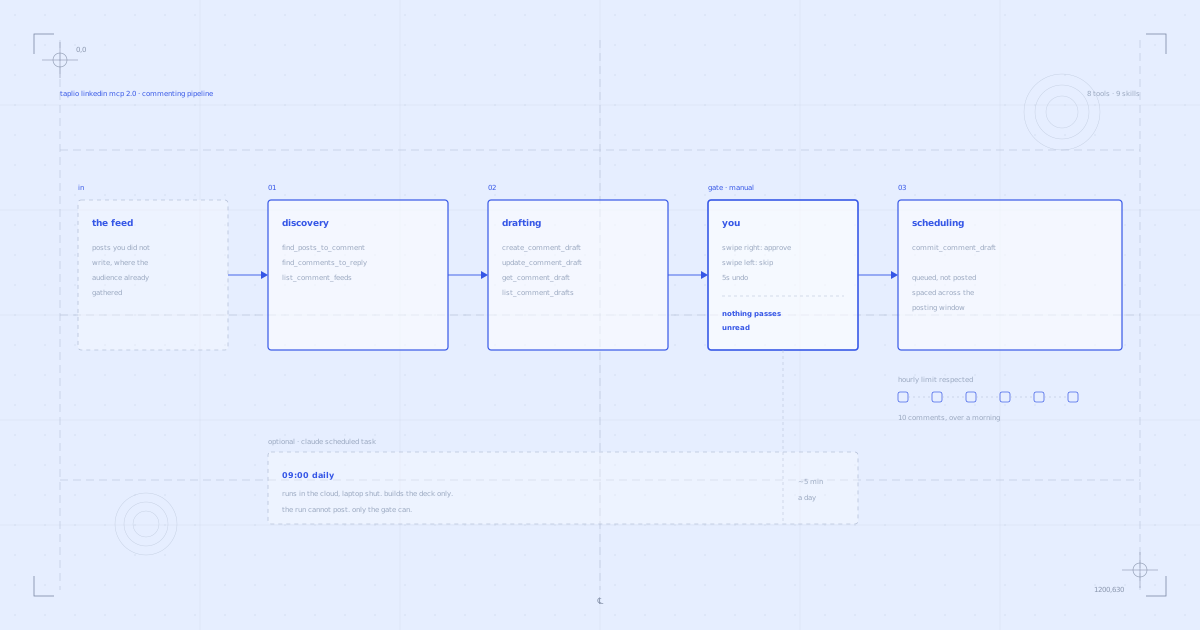
Your AI can now comment and reply for you. It finds the posts worth engaging, drafts in your voice and queues them on your Taplio account. Nothing posts until you confirm.

What is a personal brand (and how to build one)


14
min read

 Open in ChatGPT
 Open in Claude
 Open in Perplexity
Key Takeaways
- Personal brand definition: A personal brand is your professional reputation made deliberate, and it has 3 required parts: a claim a stranger can repeat, public evidence it is true, and a pattern of showing up, which Harvard Business School Online calls "the intentional, strategic practice of defining and expressing your value".
- How to build one: Run the 7 step sequence: pick a narrow territory, name the audience by role and situation, search your own name in a private window, write the statement "I help [audience] [outcome] by [proof]", fix the profile headline, publish on a holdable cadence, review quarterly.
- The number that decides: The echo test gates every other signal: ask 5 people to describe what you do unprompted, and if 4 give roughly your sentence the brand is working, while 5 different answers mean clarity is broken and no amount of posting fixes it.
- What to check first: Audit against the 7 ideas that recur across published pillar lists, clarity, credibility, competence, consistency, character, community and visibility, plus whether you can hold 2 to 3 hours of publishing a week for 6 months.
- Decision rule: Invest heavily if you sell your own expertise or compete in a crowded hiring pool, deprioritise if your work is judged on internal delivery alone, and if the gap is distribution not clarity, Taplio starts at $39 per month with a 7 day trial and no free plan.
A personal brand is the set of things people reliably associate with your name: what you do, who you do it for, and what you stand for while doing it. You already have one, whether or not you chose it. Building a personal brand on purpose means picking the signal you want attached to your name, then repeating it in public until it is the thing people recall. This guide covers what a personal brand actually is, the pillars people argue about, seven steps to build one, how to write the statement, and how to tell whether any of it is working.
What is a personal brand?
A personal brand is your professional reputation, made deliberate. Harvard Business School Online defines personal branding as "the intentional, strategic practice of defining and expressing your value." The word doing the work in that sentence is intentional. Reputation happens to everyone. A brand is the version you steered.
It has three parts, and all three have to be present.
A claim. What you do and who you do it for, in language a stranger can repeat. "I help Series A founders hire their first ten engineers" is a claim. "Passionate about people and growth" is not, because nobody can repeat it back.
Evidence. The reason to believe the claim. Work you shipped, numbers you moved, people who will say so publicly.
A pattern of showing up. One post is not a brand. The same claim, backed by fresh evidence, in the same place, over months, is a brand. Recognition is a function of repetition.
It helps to separate three words that get used interchangeably. Your reputation is what people already think, whether you tried or not. Personal branding is the activity of shaping it. Your personal brand is the result: the specific, repeatable thing that ends up attached to your name. You cannot skip straight to the third without doing the second.
Strip any of the three and it stops working. A claim with no evidence is a slogan. Evidence with no claim is a resume nobody reads. Both, shown once, is a good week that changes nothing.
Why a personal brand matters
A personal brand matters because it decides what happens before you are in the room. Hiring managers, buyers and partners look you up. What they find, and how quickly they can summarise it, is what they act on.
Three concrete effects are worth naming.
It shortens the trust cycle. Someone who has read your thinking for six months arrives at a first call already convinced you know the subject. The call is about fit, not competence. That is a different conversation and a much shorter one.
It changes who arrives. A vague professional presence produces cold outreach you have to filter. A specific one produces inbound from people who already read the claim and matched themselves to it.
It survives the job. Your title belongs to your employer. The audience that follows your name does not. People who build in public find the next thing faster because the next thing finds them.
It matters unevenly, which is worth knowing before you spend a year on it. If you sell your own expertise, or you work in a field where the hiring pool is larger than the number of good jobs, the return is high. If your work is judged entirely on internal delivery and your next role is already lined up, it is a lower priority than doing that work well. Be honest about which you are.
The catch is that visibility compounds slowly and then all at once. The first three months feel like talking into an empty room, because you are. That is the price of the asset, not evidence that it is broken.
The seven pillars of a personal brand
There is no official list of seven pillars, and anyone presenting one as the standard is selling a framework. Search for it and you will find at least four incompatible versions, from a Forbes Coaches Council post to a dozen agency blogs, each with a different seven. Nothing anchors them.
What is useful is the overlap. Read the published versions side by side and the same seven ideas keep surfacing under different names. Those are worth your attention precisely because independent people arrived at them separately.
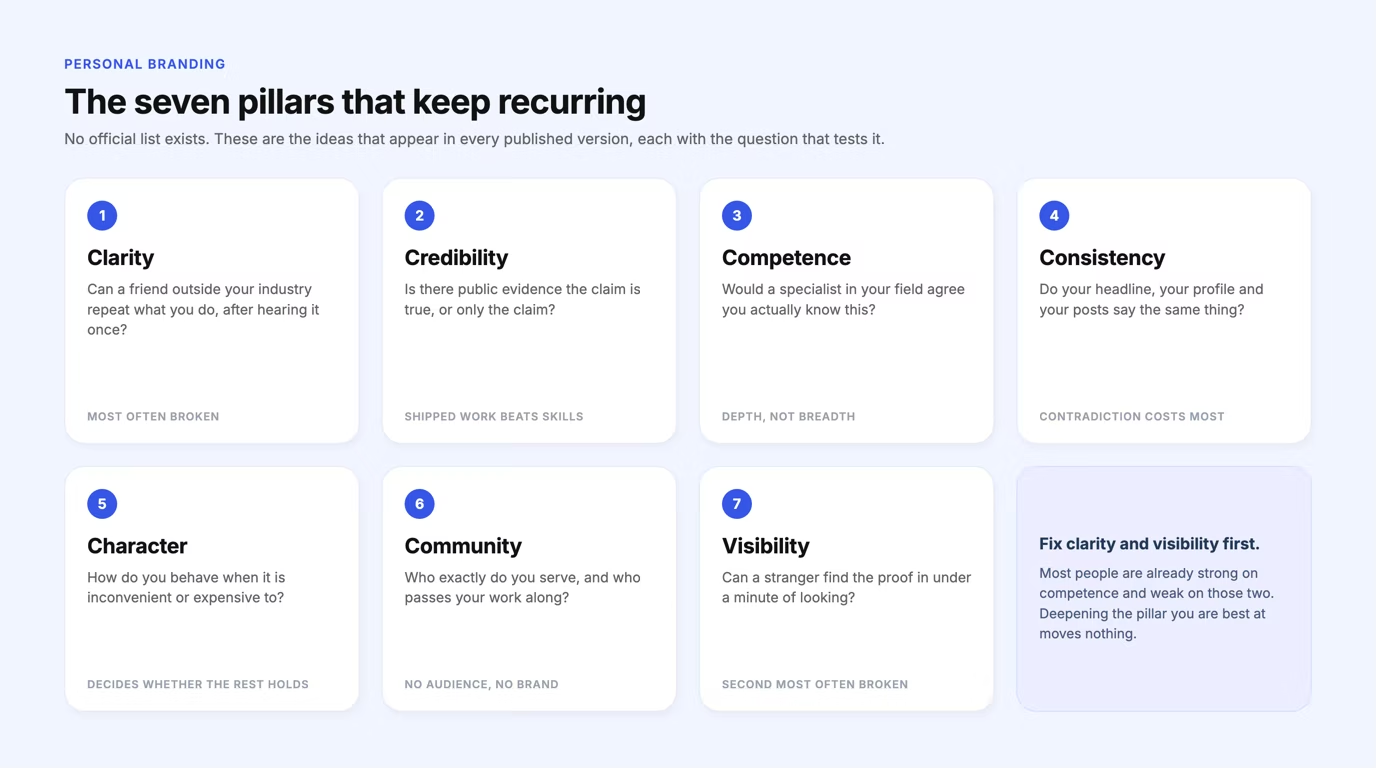
Clarity. One sentence, no jargon, that says what you do and for whom. If a friend outside your industry cannot repeat it, it is not clear yet.
Credibility. Public evidence that the claim is true. Shipped work beats stated skills.
Competence. Real depth in a defined area. A brand pointed at a subject you do not know collapses on contact with a specialist.
Consistency. The same claim, in the same voice, across every place someone might find you. Contradiction between your headline and your posts costs more than either would alone.
Character. How you behave when it is inconvenient. This is the pillar people skip and the one that actually decides whether the others hold.
Community. The specific group you serve, and the people who pass your work along. A brand with no audience is a diary.
Visibility. Proof that is easy to find. Excellent work nobody can locate does not build anything.
Treat these as a checklist to audit against, not a curriculum to complete in order. Most people are strong on competence and weak on clarity and visibility, and fixing those two moves the needle faster than deepening the one they are already good at.
How to build a personal brand in seven steps
Building a personal brand is a sequence: decide the claim, gather the evidence, pick one place to publish, then repeat until it compounds. Here is the whole sequence with what each step actually produces.
StepWhat you produceRealistic time1. Pick the territoryOne subject you will be known for, narrow enough to defendA week of thinking2. Name the audienceA specific group, by role and situation, not a demographicAn afternoon3. Audit what existsA list of what people currently find when they search your nameAn hour4. Write the statementOne sentence carrying the claim, the audience and the proofTwo or three drafts5. Fix the front doorA profile whose headline, opener and banner all say the same thingHalf a day6. Publish on a rhythmA cadence you can hold for six months without heroicsOngoing, 2 to 3 hours a week7. Review and adjustA quarterly read on which claims landed and which did notAn hour a quarter
Two notes on this sequence, because they are where people come unstuck.
Step 1 is the hard one, and it is the one people rush. Narrow feels like it costs you reach. It does the opposite. "Marketing" competes with everyone. "Pricing pages for developer tools" competes with almost nobody, and the people who need it will find you.
Step 3 is the cheapest step and the most skipped. Open a private window and search your own name. What comes back in the first five results is what a hiring manager or a buyer sees, and it is frequently a conference bio from 2019 or a profile that describes a job you left. Fixing stale surfaces costs an hour and removes a contradiction that would otherwise undercut everything you publish afterwards.
Step 6 beats step 5 on impact, and people do them in the wrong order. A perfect profile with no publishing is a shop with no stock. Ship at a rhythm you can actually keep. Our guide to building a personal brand on LinkedIn covers what that rhythm looks like on the platform where most of this happens.
How to write a personal brand statement
A personal brand statement is one sentence that says who you help, what you help them do, and why you are credible. It goes in your headline, at the top of your profile, and in your own mouth when someone asks what you do.
The formula that survives contact with reality is simple: I help [specific audience] [achieve a specific outcome] by [the method or proof that makes it believable]. Everything else is decoration.
Four written statements, each showing a different way to make the formula carry weight.
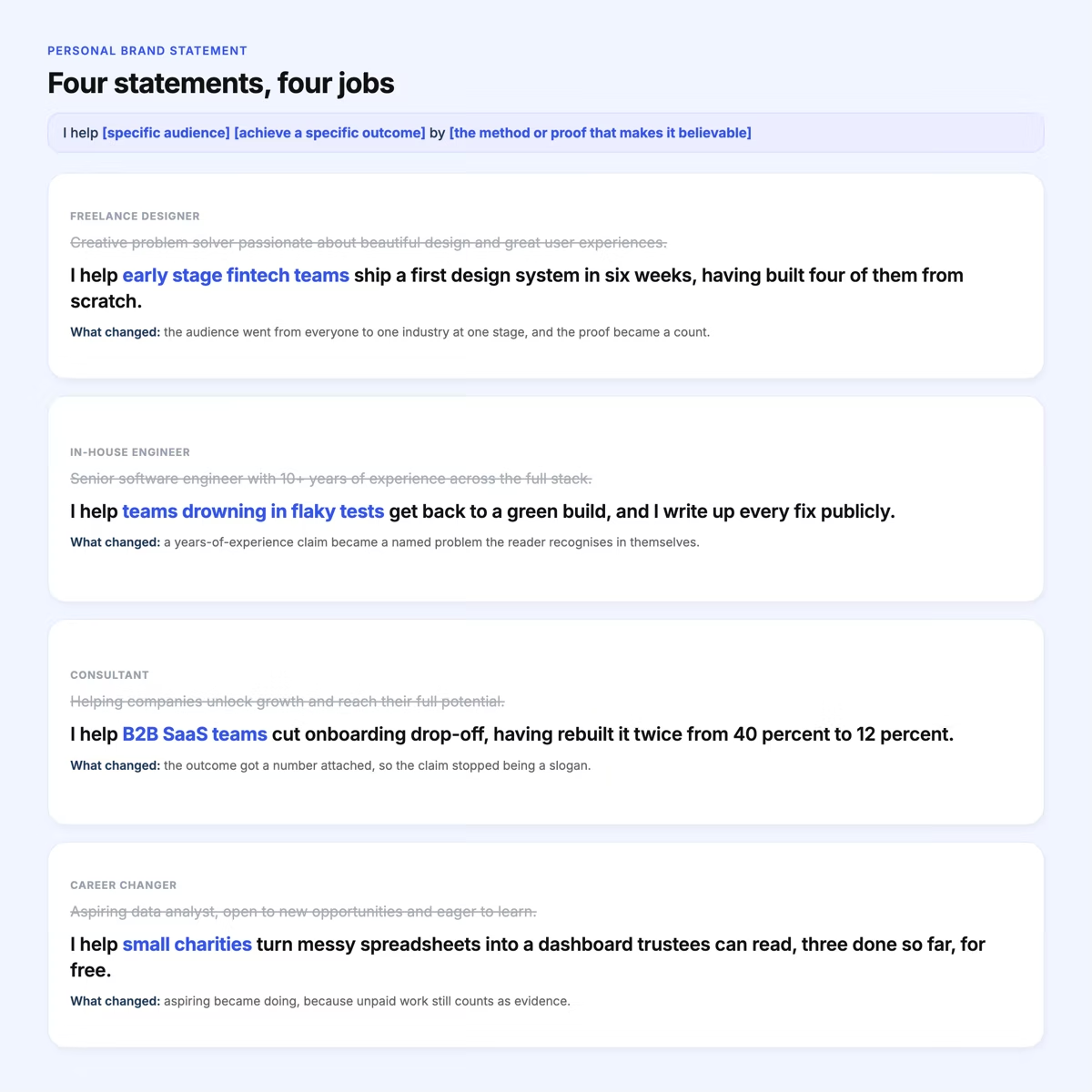
What separates the strong versions from the weak ones is almost always specificity in one of two places: the audience, or the proof. "I help companies grow" fails on both. "I help B2B SaaS teams cut onboarding drop-off, having rebuilt it twice from 40 percent to 12 percent" fails on neither.
Write it, then run three tests. Can a stranger repeat it after hearing it once. Would a competitor be unable to claim the same sentence. Does it contain a number, a name or a named method. If it fails the third test it is a positioning statement, not a brand statement, and it will not travel.
If you want a starting point rather than a blank page, the LinkedIn headline generator produces variations you can cut down.
Personal brand examples worth studying
The useful thing to study is not a famous person's brand but the pattern underneath it. Three patterns cover most of what works, and each one suits a different situation.
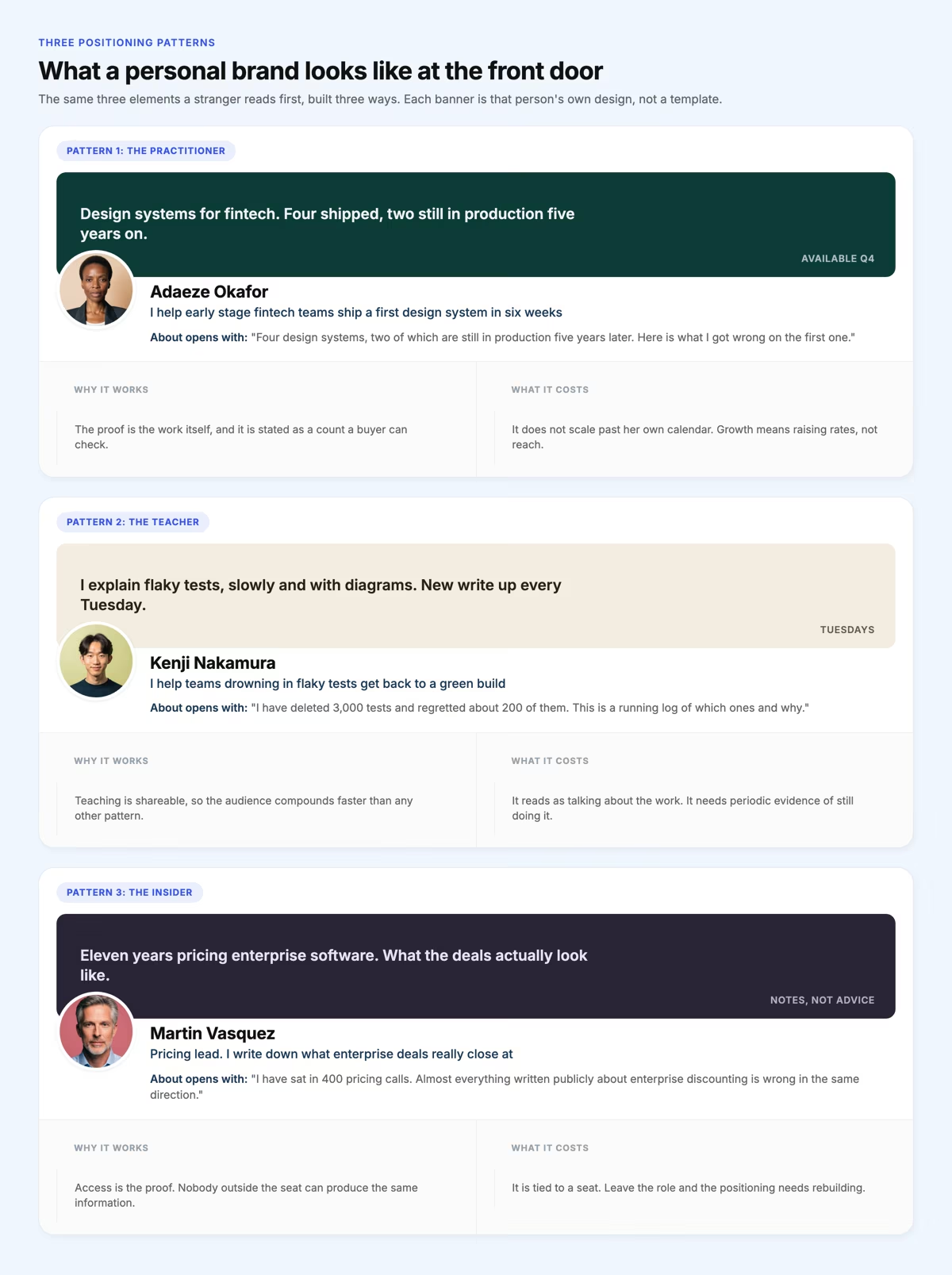
The practitioner. Positioned on doing the work, and the proof is the work itself. Strongest for consultants, freelancers and anyone selling their own hands. The risk is that the brand does not scale past your calendar.
The teacher. Positioned on explaining a subject clearly, and the proof is that people learn from it. Strongest for building an audience fast, because teaching is inherently shareable. The risk is being seen as someone who talks about the work rather than does it, which is why the teacher pattern needs periodic evidence of practice.
The insider. Positioned on access and vantage point, and the proof is information others do not have. Strongest for operators inside interesting companies. The risk is that it is tied to a seat you may not keep.
Notice what all three have in common. Each one is legible in under five seconds, each one names a specific audience, and each one puts its evidence where a stranger will hit it first. You can see the full range of approaches in our collection of personal brand examples and statements.
What a personal brand is not
Most of the resistance to personal branding is resistance to a caricature of it. Five misreadings do the damage, and clearing them out makes the actual work easier.
It is not self-promotion. Promotion is talking about yourself. A brand is being useful in public, consistently enough that people remember who was useful. The second produces the first as a side effect. Reversing the order is what makes people cringe, correctly.
It is not a logo, a color palette or a font. Visual identity is the last five percent, and it only matters once the claim underneath is settled. Choosing a brand color before you can say what you do is procrastination with a design tool.
It is not a persona. A character you have to maintain is expensive and it fails under pressure, because you will eventually be tired, wrong or angry in public. The version of you that holds up is the real one with the volume adjusted.
It is not a follower count. Followers are a proxy, and a bad one. Ten thousand people who cannot say what you do are worth less than four hundred who can and who work in your market.
It is not permanent. People treat the claim as a tattoo and freeze rather than pick one. It is a bet you re-examine quarterly. Nobody is holding you to the positioning you chose in March.
How to tell whether your personal brand is working
A personal brand is working when strangers can describe what you do, and when opportunities start arriving instead of being chased. Both are measurable, and neither is a follower count.
Five signals are worth tracking. Track them quarterly, not weekly, because the underlying process moves in months.
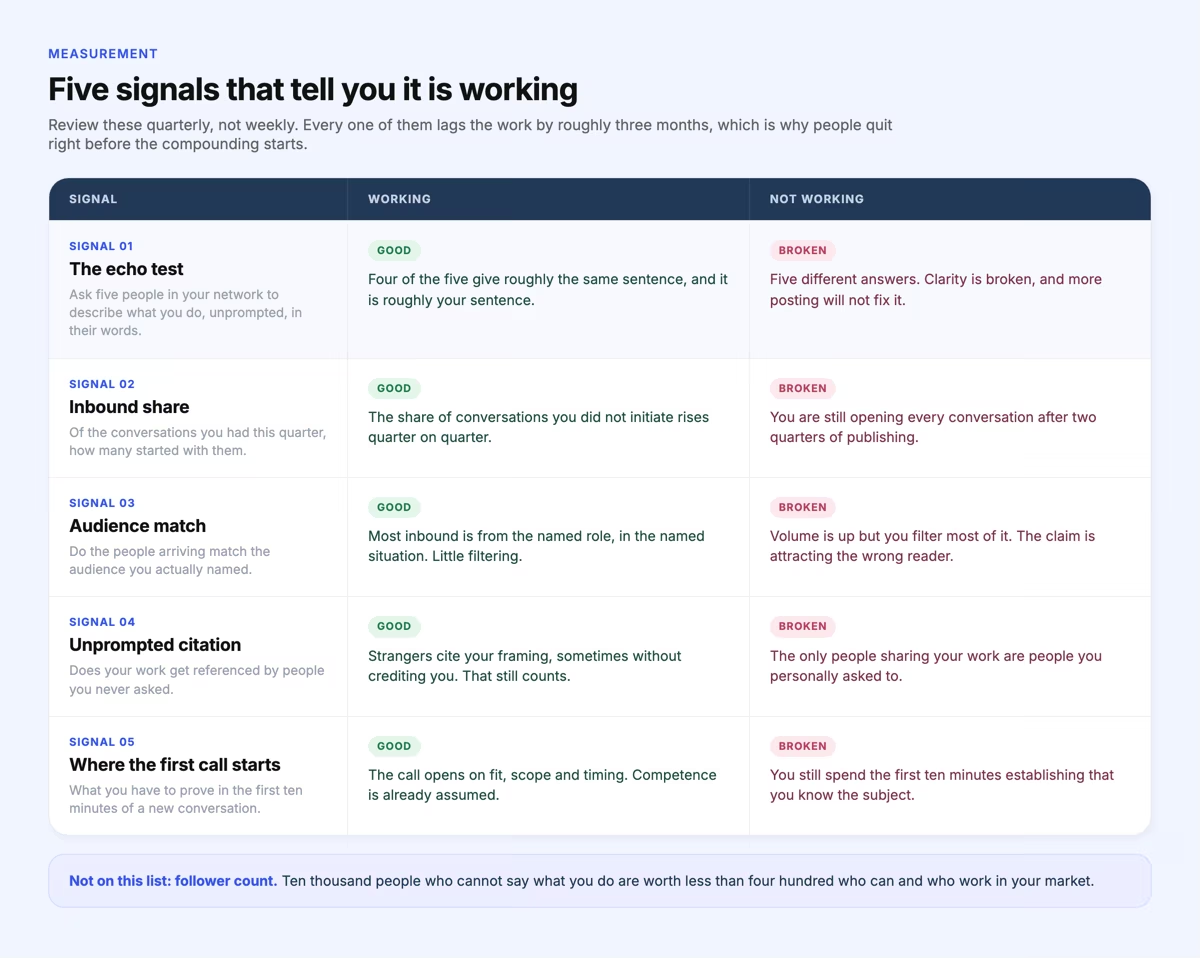
The echo test is the one that matters most and the one nobody runs. Ask five people in your network to describe what you do, in their words, without prompting. If four of them say roughly the same sentence, and it is roughly your sentence, the brand is working. If you get five different answers, your clarity pillar is broken and no amount of posting will fix it.
The others are easier to instrument. Watch the ratio of inbound to outbound conversations. Watch whether the people reaching out already match your named audience or whether you are still filtering. Watch whether your work gets cited by people you did not ask.
For the distribution side of it, benchmarks help you separate a content problem from a reach problem. Taplio's LinkedIn Benchmark analyses more than 200,000 LinkedIn posts every month, which gives you a reference point for whether your engagement is genuinely low or simply normal for your follower count.
One warning. Every one of these signals lags the work by roughly a quarter. Judging month one on outcomes is how people quit in month two, right before the compounding starts.
Frequently asked questions
What are the 7 pillars of personal branding?
There is no official set of seven pillars. Published versions disagree with each other, and at least four incompatible lists circulate, including one from a Forbes Coaches Council contributor. The seven ideas that recur across those versions are clarity, credibility, competence, consistency, character, community and visibility. Treat that as a useful audit checklist rather than a standard, because no standard exists.
What are the 5 A's of personal branding?
The version most commonly cited online is authenticity, authority, aspiration, appearance and articulation. It is a memory aid produced by branding agencies, not a researched framework, and no authoritative source underwrites it. It is fine as a prompt for self-assessment and worth nothing as an argument.
What are the three C's of personal branding?
No stable three C's framework exists. Searches for it mostly return five C's lists instead, and those disagree too: clarity, consistency, character, communication and charisma in one version, clarity, content, connection, creativity and community in another. If someone cites the three C's at you, ask which three, because there is no agreed answer.
Can you show me a personal brand in practice?
Yes. Three worked profile specimens sit in the personal brand examples worth studying section above, each one built on a different positioning pattern: the practitioner, the teacher and the insider. Each specimen shows the headline, the opening line of the about section and the banner treatment together, because those three elements are what a stranger reads before deciding whether to keep going.
What is a personal brand statement?
A personal brand statement is one sentence naming who you help, what you help them do, and why you are credible. The workable formula is "I help [specific audience] [achieve a specific outcome] by [method or proof]." It should be repeatable by a stranger after one hearing, and it should contain at least one number, name or named method, otherwise it will not travel.
Why is personal branding important?
It is important because it determines what people conclude about you before you get to speak. In practice that shows up three ways: it shortens the trust cycle so first calls are about fit rather than competence, it changes who reaches out so you filter less, and it belongs to you rather than your employer, which means it survives a job change.
How do you build a personal brand on social media?
Pick one platform where your named audience actually is, make your profile say one thing consistently, and publish on a cadence you can hold for six months. The order matters: publishing beats polishing, so a decent profile plus weekly output outperforms a perfect profile plus silence. Depth on one platform beats presence on four.
What does personal brand mean?
Personal brand means the professional reputation attached to your name, shaped on purpose rather than left to accumulate. It is made of a claim about what you do, evidence that the claim is true, and enough repetition that people remember it. The distinction from plain reputation is intent, not scale.


Keep reading
All articlesRelated Articles
.avif)
Your Linkedin AI coach is waiting for you
Join 12,000+ creators who let their coach turn the blank page into a plan and watch their audience compound.
7-day free trial · 30 day money back · Cancel anytime
AVG. VIEWS
2,979
-1.5%
ENGAGEMENT
3.2%
+0.8%

Free Monthly Report
How does your LinkedIn compare?
Get free monthly benchmarks on reach, engagement, and content format performance.
Get the Benchmark