
Pricing


AI writer

Taplio
MCP V2
New: Engage tools
Taplio MCP V2 now available, try it out
Your AI can now comment and reply for you. It finds the posts worth engaging, drafts in your voice and queues them on your Taplio account. Nothing posts until you confirm.

How to Ask for and Give a LinkedIn Recommendation (Steps + Templates)

July 11, 2024

9
min read

 Open in ChatGPT
 Open in Claude
 Open in Perplexity

Key Takeaways
- Recommendations are trusted social proof: 70% of people trust a recommendation even when it comes from someone they do not know, which makes LinkedIn recommendations far more convincing than self-reported skills.
- Recommendations boost credibility and SEO: relevant keywords inside a LinkedIn recommendation help a profile rank higher in LinkedIn and Google search results, while the testimonial itself builds trust with profile visitors.
- Ask people who know your work firsthand: the best recommenders are happy clients, team members, managers or supervisors, satisfied customers, and employees who report to you.
- Timing drives response rates: the best moments to request a LinkedIn recommendation are right after a successful collaboration, when reaching a career milestone such as a promotion or award, and before starting a job search.
- Personalize every request: LinkedIn's "Request a recommendation" feature works from a connection's profile or your own Recommendations section, but skipping the default message and giving context on which skills to highlight, plus a heads-up via email first, makes a positive answer far more likely.
To ask for a LinkedIn recommendation, go to the person's profile, click More, choose Request a recommendation, then send a short personal note instead of the default text. That is the whole flow. The part that decides whether you get a strong recommendation back is who you ask, when you ask, and what you write in that note. This guide covers all three, plus how to give a recommendation to someone else and how to fix a recommendation that will not show up.
Why ask for LinkedIn recommendations
Your profile only says what you say about yourself. A recommendation is someone else vouching for it, which is why it carries far more weight than another line in your summary. A few reasons to make it a habit:
- Credibility. A recommendation is social proof that people who worked with you rate you. It reassures anyone checking your profile before a call, an interview, or a deal.
- Search visibility. Recommendations add real keywords to your profile, which helps you surface in LinkedIn and Google searches for those skills.
- Specific proof of skills. A good recommendation names a result or a moment, which does the convincing that a skills list cannot.
- Warm reconnection. Asking gives you a natural reason to reconnect with a former manager, client, or colleague, especially if you offer to write one back.
Who to ask for a recommendation
Ask people who know your work well enough to be specific. A vague recommendation from a senior name does less than a detailed one from someone who actually saw you deliver. Good people to ask:
- Clients you delivered real results for
- Managers and supervisors who watched you grow
- Colleagues you worked closely with on a project
- People who reported to you, if you led them well
- Mentors or partners who know your trajectory
One thing to keep in mind: whoever recommends you is visible on your profile, and visitors can click through to them. A recommendation from someone relevant in your field is worth more than one from a friend outside it.
When to ask for a recommendation
Timing changes your hit rate. Ask when the work is fresh and the goodwill is high:
- Right after a win. Just after you wrap a successful project or collaboration, while the details are still sharp in their memory.
- At a milestone. A promotion, an award, or a finished program is a natural moment to reach out to the people who were part of it.
- Before a job search. Line up recommendations before you start applying, not in a rush once you already need them.
How to request a recommendation on LinkedIn, step by step
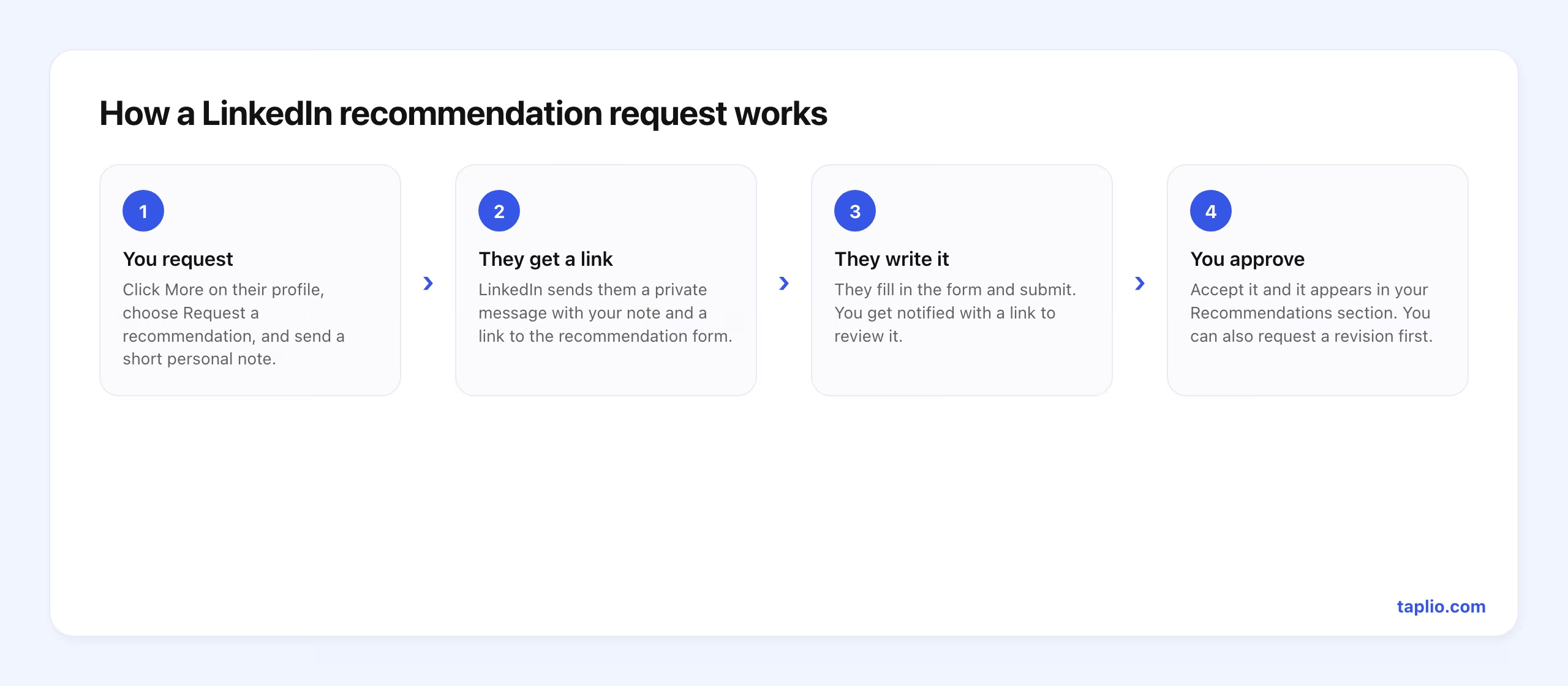
There are two ways to request one. The fastest is from the other person's profile.
From their profile (desktop):
- Go to the profile of the first-degree connection you want a recommendation from.
- Click the More button in their intro section.
- Select Request a recommendation.
- Choose your relationship and your position at the time, then write your message and click Send.
From your own profile:
- Go to your profile and scroll to the Recommendations section.
- Click the plus icon and choose Ask for a recommendation. If you have no recommendations yet and do not see the section, click Add profile section, open Recommendations, and choose Ask for a recommendation.
- Type the connection's name, select them, and click Next.
- Set the relationship and position, write your message, and click Send.
On the mobile app: the flow is the same. Open the person's profile, tap More, tap Request a recommendation, set the relationship and position, write your note, and send.
The one rule that matters: never send the default message. Replace it with a short, specific note that reminds them of your work together and tells them what to focus on. The next section gives you templates to copy.
Sample messages to request a recommendation
A good request does three things: it reconnects warmly, it reminds them of something specific you did together, and it makes the ask easy by suggesting what to cover. Copy one of these and fill in the brackets.
After a successful project
Hi [Name], I really enjoyed working with you on [project]. Your [specific thing they did] made a real difference. I am refreshing my LinkedIn profile and a short recommendation from you about my [skill or contribution] would mean a lot. Would you be open to writing a few lines? Happy to return the favor. Thanks, [Your name]
After a milestone
Hi [Name], quick good news: I just [promotion, award, or milestone]. A lot of that traces back to what I learned working with you at [company]. I am updating my profile and would be grateful for a brief recommendation touching on my [skills]. No rush, and thank you either way. [Your name]
When you are job searching
Hi [Name], I am starting to explore new roles in [target area] and building up my profile for it. Working with you at [company] was a highlight, and a recommendation from you about my [relevant skills] would carry real weight with people who do not know me yet. Would you be willing to add a few lines? Thanks so much, [Your name]
Tell them roughly what to write and they will thank you for it. A blank request makes them do the hard work of deciding what matters; a guided one takes two minutes. If they ask for examples of what a strong recommendation looks like, point them to our guide on how to write a LinkedIn recommendation, which has templates they can adapt.
How to give or add a recommendation for someone
Giving a recommendation is the fastest way to get one back, and it takes a couple of minutes. Here is how to recommend someone on LinkedIn:
- Go to the profile of the person you want to recommend.
- Click More, then select Recommend.
- Choose your relationship and your position at the time you worked together, then click Next.
- Write the recommendation and click Send. It goes to them for approval before it appears on their profile.
You can also respond to a request someone sent you: open their message, click the link, and write it there. If you want it to actually land, keep it specific. Our guide to writing LinkedIn recommendations has a five-part structure and copy-paste templates by relationship, so you never have to start from a blank box.
How to manage the recommendations you receive
When someone recommends you, LinkedIn sends you a private message with a link to review it before it goes live. You are in control of what appears:
- Add it to your profile. Approve it and it shows in your Recommendations section.
- Ask for a revision. If it is too vague, you can politely request a change before publishing.
- Dismiss it. You can decline to show a recommendation without it ever appearing.
- Spotlight the best one. LinkedIn does not let you add a received recommendation to your Featured section directly, since Featured only holds posts, articles, links, and media. To highlight a standout recommendation near the top of your profile, screenshot it and add that image to Featured through Add profile section then Featured, or write a short post about the win and feature that instead.
Troubleshooting: recommendation not showing up
If a recommendation is missing, it is almost always one of these:
- You have not approved it yet. A recommendation only appears after you accept it. Check your messages for the review link.
- It is hidden. In the Recommendations section you can show or hide individual recommendations. Open Manage recommendations, go to the Received tab, and set the recommendation to Show.
- The section is not on your profile. If you have never had a recommendation, the section will not display until you add it through Add profile section.
- It is still pending with the other person. If you sent a request and see nothing, the recommendation link is waiting in their inbox. A gentle nudge usually does it.
Mistakes to avoid when asking
Most weak recommendations trace back to a weak request. Avoid these:
- Sending the default message. The generic LinkedIn text tells the person nothing, so you get a generic recommendation back, if you get one at all.
- Giving no context. Do not make them guess what to write. Remind them of the specific work and suggest an angle.
- Asking people who barely know your work. A detailed recommendation from a close colleague beats a vague one from a big title.
- Blasting everyone at once. Personalize each request. A recognizably copy-pasted ask reads as low effort.
- Only ever asking, never giving. Recommendations are reciprocal. Writing one first makes the ask far easier and often prompts one in return.
Make recommendations part of a stronger profile
Recommendations do their best work on a profile that already earns attention. Once you have a few, make sure the rest of your profile lives up to them by running a full LinkedIn profile review of your headline, banner, and summary. Taplio helps you show up consistently so more of the right people see the proof you have gathered.
Frequently asked questions
How do I politely ask for a LinkedIn recommendation?
Send a short personal message rather than the default request. Remind the person of specific work you did together, say what you would like the recommendation to highlight, and make it easy to say yes by keeping it brief and offering to write one in return.
How do I add a recommendation on LinkedIn?
To recommend someone, open their profile, click More, select Recommend, set your relationship and position, write the recommendation, and send it for their approval. To add a recommendation you received, approve it from the private message LinkedIn sends you and it appears in your Recommendations section.
Why can I not find recommendations on my profile?
The Recommendations section only shows once you have at least one approved recommendation. If it is missing, either you have not approved a pending one, it is hidden in Manage recommendations, or the section has not been added yet through Add profile section.
What is the LinkedIn recommendation link?
When you request a recommendation, LinkedIn sends the other person a private message with a link that opens the form where they write and submit it. When they finish, you get a link back to review and approve the recommendation before it goes public.
Should I offer to write a recommendation in return?
Yes. Offering to write one back, or better, writing one first, makes people much more likely to say yes and sets a warmer tone. Just make sure your recommendation is specific rather than a quick favor, since a vague one helps no one.
How many LinkedIn recommendations should I have?
There is no fixed number, but a handful of specific recommendations from relevant people beats a long list of generic ones. Aim for a few that cover different sides of your work, such as a manager, a client, and a close colleague.


Keep reading
All articlesRelated Articles



.avif)
Your Linkedin AI coach is waiting for you
Join 12,000+ creators who let their coach turn the blank page into a plan and watch their audience compound.
7-day free trial · 30 day money back · Cancel anytime
AVG. VIEWS
2,979
-1.5%
ENGAGEMENT
3.2%
+0.8%

Free Monthly Report
How does your LinkedIn compare?
Get free monthly benchmarks on reach, engagement, and content format performance.
Get the Benchmark