
Pricing


AI writer

Taplio
MCP V2
New: Engage tools
Taplio MCP V2 now available, try it out
Your AI can now comment and reply for you. It finds the posts worth engaging, drafts in your voice and queues them on your Taplio account. Nothing posts until you confirm.

B2B content marketing on LinkedIn: a practical guide


15
min read

 Open in ChatGPT
 Open in Claude
 Open in Perplexity
Key Takeaways
- B2B content marketing on LinkedIn: Publish on a weekly cadence for a named buyer, mapping 7 content types across the funnel with LinkedIn as the primary distribution layer; Taplio supports the planning and measurement side from $39/month, with a 7-day trial and no free plan.
- The five steps: Define the ideal customer profile by job title and company size, map at least one content type per funnel stage, make LinkedIn the primary distribution channel, set a sustainable weekly cadence, then measure replies and demo requests monthly.
- The number that decides: Taplio's LinkedIn Benchmark analyzes 60,000+ LinkedIn posts each month, giving a real spread of what gets published and how it performs instead of advice built on a handful of viral screenshots.
- What to check first: Confirm the named job titles and company size the content targets, which funnel stage is thinnest, the cadence the team can actually ship every week, a written distribution plan, and a monthly review of which posts produce replies.
- Decision rule: Run one channel consistently, usually LinkedIn, plus one supporting format such as a blog or newsletter, rather than five channels updated sporadically, and open posts with a number, a named customer, or a numbered promise.
B2B content marketing is the practice of publishing content, blog posts, case studies, LinkedIn posts, whitepapers, and more, to reach the people who research a business purchase before they ever talk to sales. It works because B2B buyers now do most of their research alone, and the content a company puts out is often the only signal they see before a demo call. This guide covers what to publish, where it fits your funnel, how to build a real strategy around it, and how to actually show up on the channel where B2B buyers spend their working hours.
What is B2B content marketing
B2B content marketing is the practice of creating and distributing content aimed at other businesses rather than individual consumers, with the goal of building trust and generating pipeline over time. It covers formats like blog posts, case studies, whitepapers, webinars, newsletters, and LinkedIn posts, published on a schedule rather than as one-off campaigns tied to a single launch.
The difference from B2C content marketing is the buying process it supports. A B2B purchase usually involves more than one decision maker, a longer research window measured in weeks or months, and a higher price tag, so the content has to educate a group rather than trigger a single impulse decision.
Consumer content can succeed on entertainment value alone. B2B content rarely can, because the reader is not scrolling for fun, they are trying to solve a specific problem at work and will judge the content on whether it actually helps them do that.
That difference shows up in four ways. B2B content leans on proof, data, named customers, specific results, more than B2C content does, because the reader is building a business case they will have to defend internally. It is also written for a narrower audience defined by job title and company size rather than broad demographics.
The other two differences are about time. B2B content tends to have a longer shelf life, since a buyer researching a purchase might read a two-year-old comparison page the same way they read one published last week. And it is judged on pipeline influence over months, not on a single day's click-through rate.
Why B2B content marketing matters
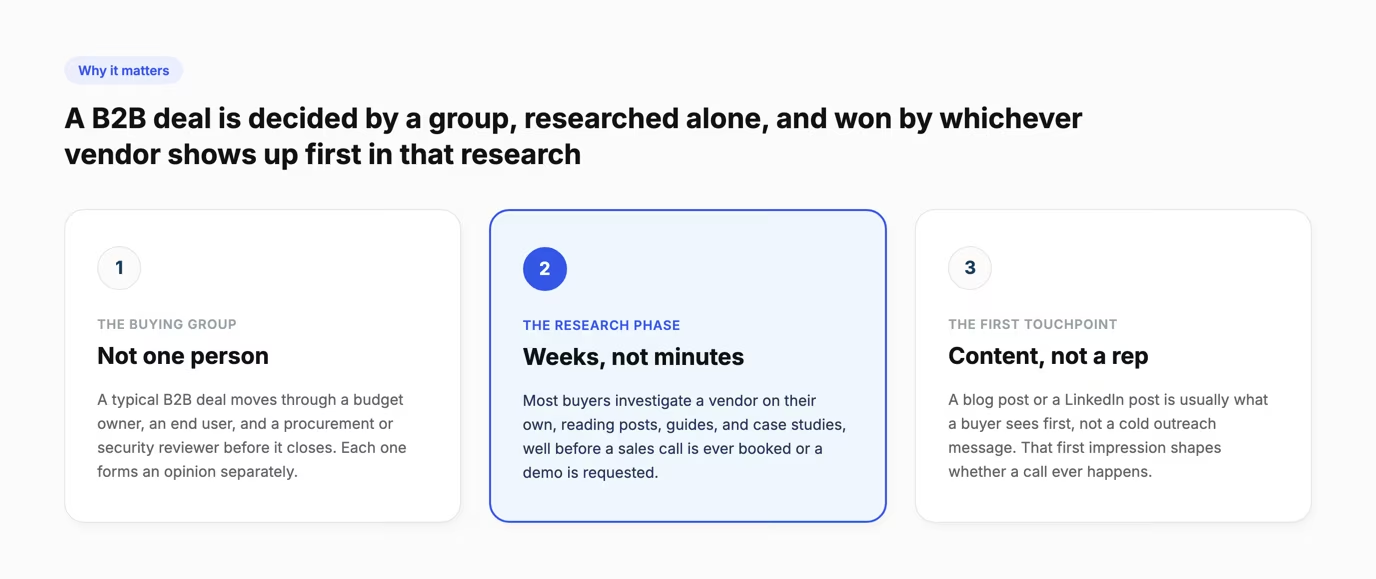
B2B content marketing matters because most of the buying decision now happens before a prospect ever contacts sales. Buyers read blog posts, compare vendors on LinkedIn, and scan case studies on their own, so the content a company publishes shapes the shortlist long before a sales rep gets involved in the conversation.
It also compounds in a way paid acquisition does not. A blog post or a LinkedIn post that ranks or gets shared keeps working weeks after it is published, while a paid ad stops the moment the budget runs out. That is the core argument for treating content as a channel with its own plan and its own budget line, not a byproduct of whatever the marketing calendar has room for.
A B2B purchase is rarely made by one person. Multiple stakeholders, procurement, the end user, a finance approver, a security reviewer, each need different proof before they sign off, and each one is more likely to encounter that proof through content than through a cold call from a rep they have never met.
Content also does work sales cannot do at scale. A single well-targeted case study can answer the same objection for hundreds of prospects a month, while a sales team can only have that conversation one account at a time. That leverage is the real business case for investing in content as its own function rather than a task assigned to whoever has spare time.
It also shapes reputation before a buyer ever fills out a form. A prospect who has read a company's LinkedIn posts for months arrives at a demo already trusting the team behind the product, which shortens the sales cycle in a way no discount or incentive can replicate on its own.
B2B content types and where they fit your funnel
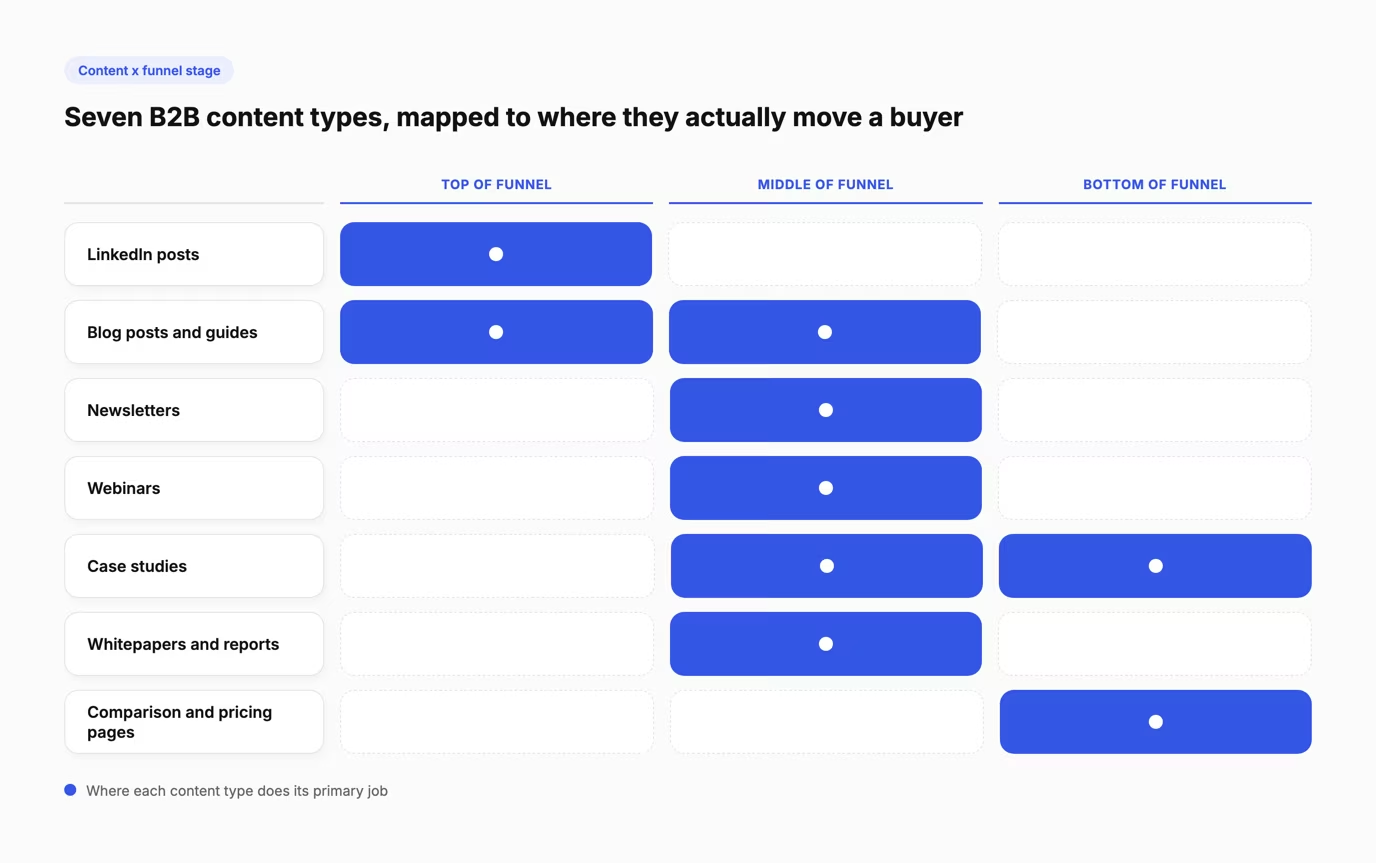
The right B2B content type depends on where the reader sits in the funnel, not on which format is trendy this quarter. Top-of-funnel content should be easy to consume with no commitment required, middle-of-funnel content should build a specific case for one solution, and bottom-of-funnel content should remove the last objection standing between a prospect and a signature.
Here is how the most common B2B content types map to funnel stage, and the specific job each one does:
| Content type | Funnel stage | Job it does |
|---|---|---|
| LinkedIn posts | Top of funnel | Build reach and recognition with no click required |
| Blog posts and guides | Top to middle of funnel | Answer a search query and start earning organic traffic |
| Newsletters | Middle of funnel | Keep warm leads engaged between touchpoints |
| Webinars | Middle of funnel | Go deeper on one use case with a live, self-selected audience |
| Case studies | Middle to bottom of funnel | Show a named customer got the result the prospect wants |
| Whitepapers and reports | Middle of funnel | Capture a lead in exchange for original research or data |
| Comparison and pricing pages | Bottom of funnel | Answer the last objection right before a decision is made |
Most B2B teams overinvest in bottom-of-funnel content, comparison pages, pricing FAQs, one-pagers, and underinvest in the top. That is a mistake, because without a steady flow of people entering the funnel at the top, there is nothing left to convert at the bottom six months later.
LinkedIn deserves a specific note here because it is the one format on this list that does double duty. A single LinkedIn post can build top-of-funnel awareness on its own, while also linking out to a case study or a blog post that carries the reader further down the funnel in one motion.
It is also worth repurposing rather than treating each row in the table as a separate content-creation project. One customer interview can become a case study for the bottom of the funnel, three LinkedIn posts for the top, and a slide in a webinar deck for the middle, all from a single hour of work instead of three or four separate briefs.
Choosing between types comes down to two questions: which funnel stage is thinnest right now, and which format the team can actually produce every week. A webinar that never gets recorded because nobody has time is worth less than a weekly LinkedIn post that ships, whatever a content-type checklist says about coverage.
How to build a B2B content marketing strategy
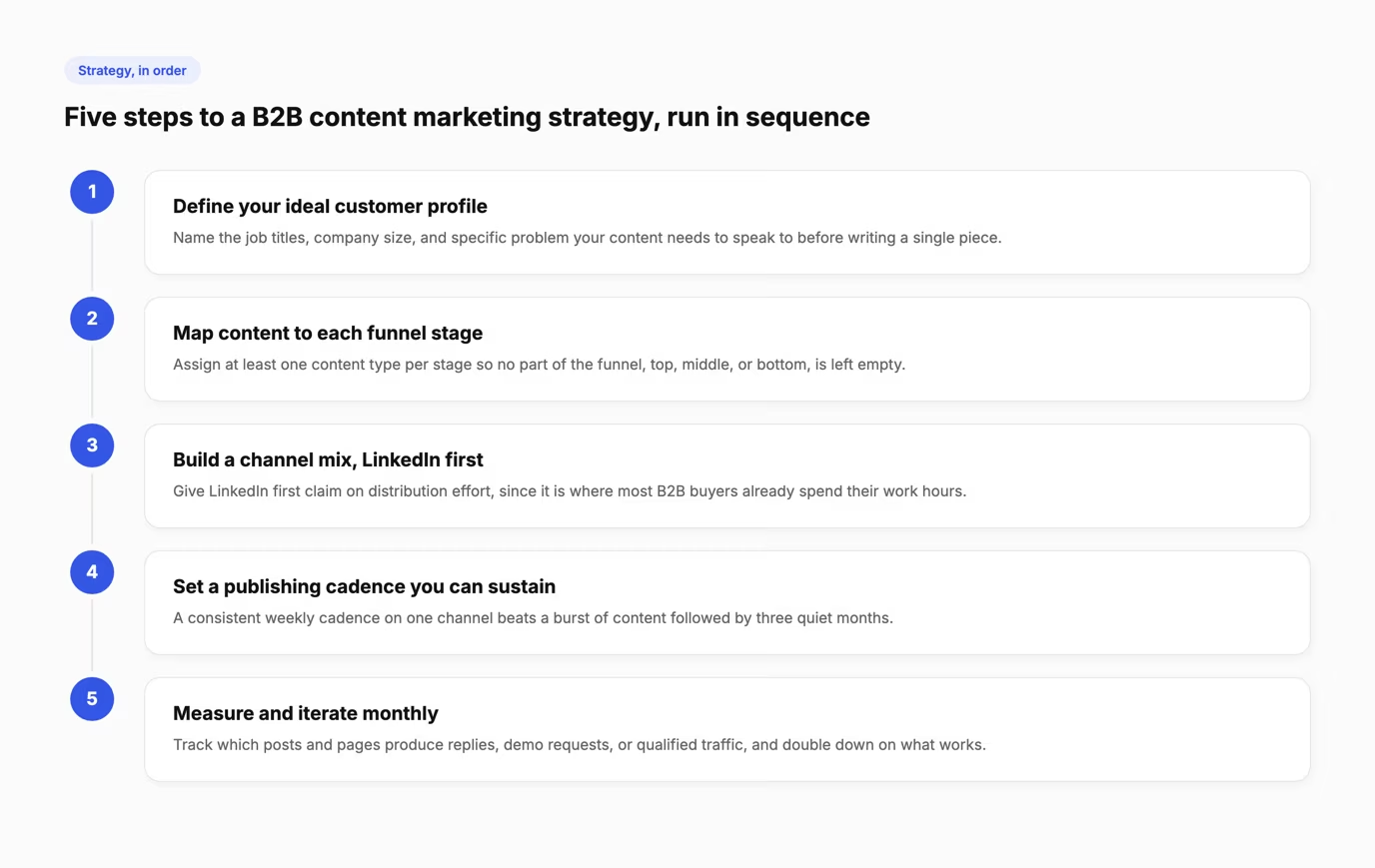
A B2B content marketing strategy starts with a defined buyer, not a content calendar. Follow these five steps in order, and only move to the next one once the previous one is written down somewhere the whole team can see it.
1. Define your ideal customer profile. Name the job titles, company size, and specific problem your content needs to speak to. A strategy written for "marketers" produces generic content that speaks to nobody in particular; a strategy written for "demand gen leads at 50 to 200 person B2B SaaS companies" produces specific content that reads as if it was written for one reader.
2. Map content to each funnel stage. Use the table above as a starting point and assign at least one content type per stage, so no part of the funnel is left empty. A strategy that is all case studies and no top-of-funnel content has nothing feeding it new prospects.
3. Build a channel mix, with LinkedIn as the primary distribution layer. Most B2B buyers are on LinkedIn during work hours in a way they are not on other social platforms, so it earns first claim on distribution effort, not an afterthought after the blog post is already written and needs somewhere to go.
4. Set a publishing cadence you can actually sustain. A consistent weekly cadence on one channel beats a burst of content followed by three quiet months, because both the algorithm and a human audience reward consistency over intensity.
5. Measure and iterate monthly. Track which posts and pages actually produce replies, demo requests, or qualified traffic, and double down on the pattern that works rather than the format you personally prefer to write.
The order matters more than any individual step. Skipping straight to step 4, a cadence, without step 1, a defined buyer, is how teams end up publishing consistently to an audience that was never going to buy.
Small teams often ask how many content types they need to run at once. The honest answer is fewer than most strategy decks suggest: one channel run consistently, usually LinkedIn given how much of a B2B audience is already there, plus one supporting format like a blog or a newsletter, outperforms five channels updated sporadically because nobody has time to keep up with all five.
B2B content marketing examples on LinkedIn
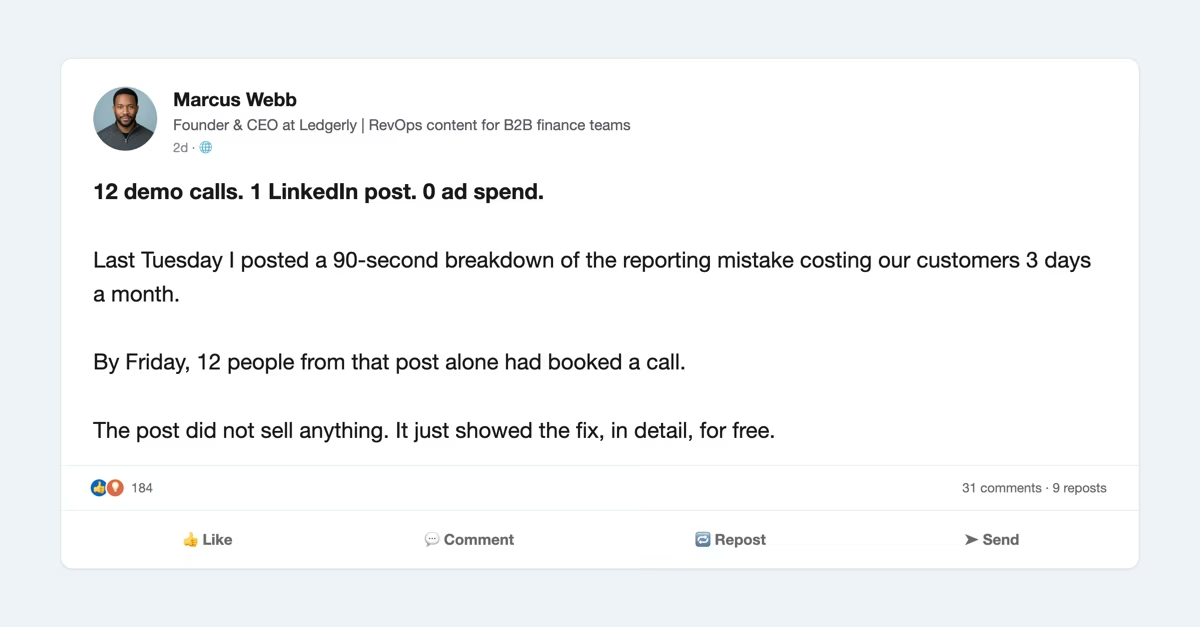
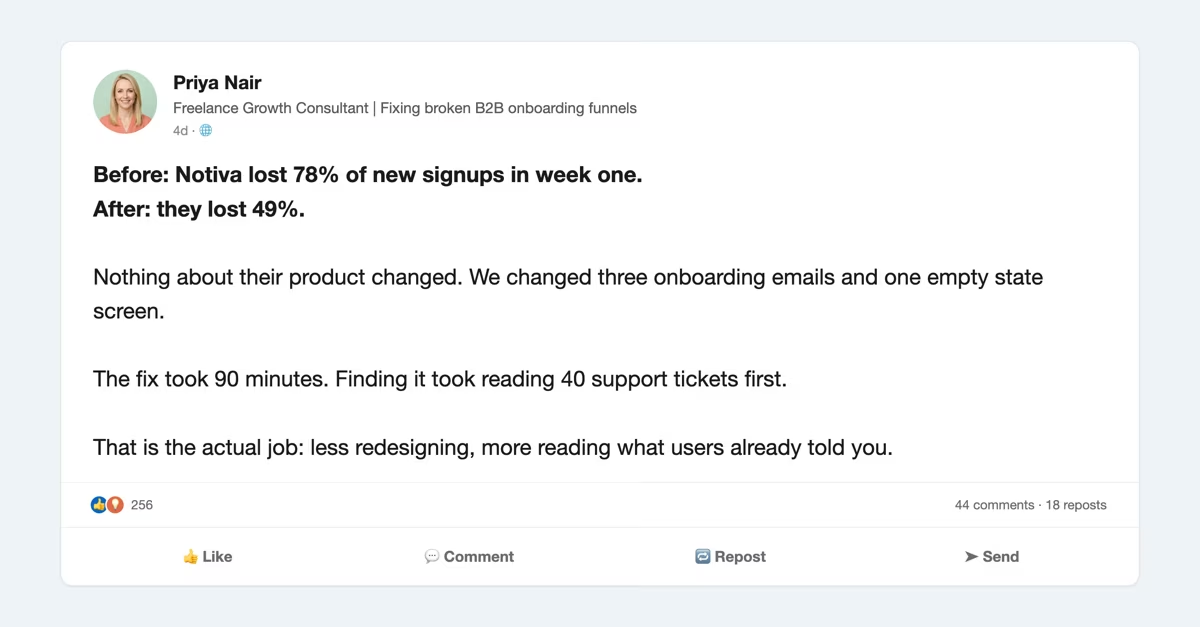
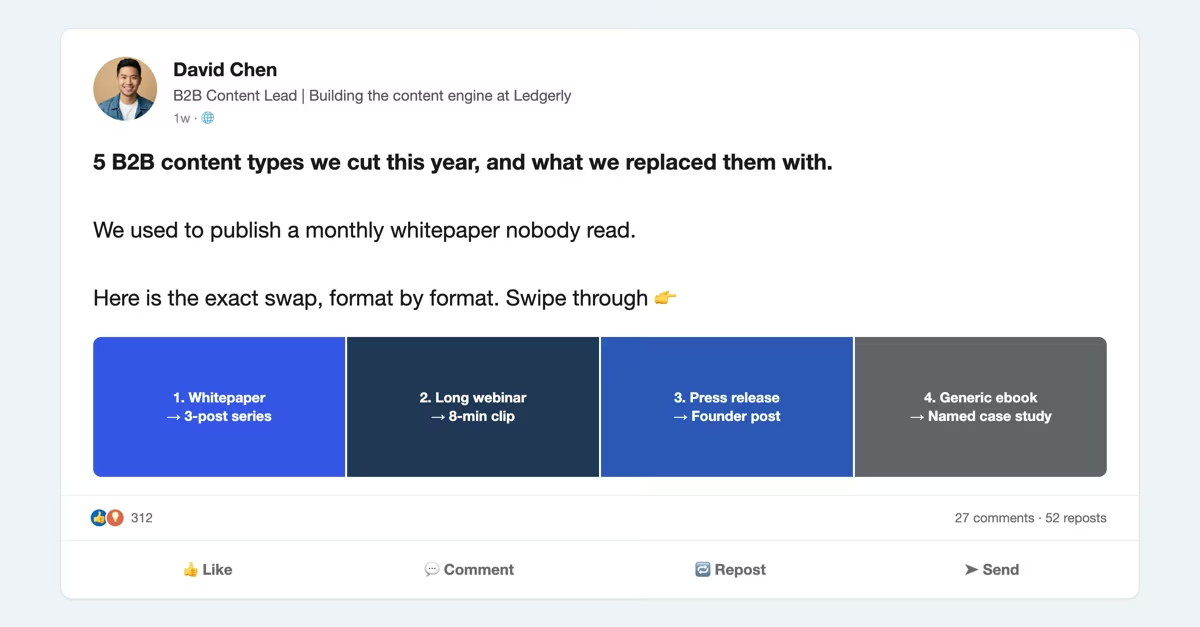
Three B2B content marketing patterns do most of the work on LinkedIn: the data-led hook, the customer-story hook, and the carousel teaser. Each one appears below as a real post mockup rather than described in the abstract, because the difference between a hook that lands and one that does not is visible in the first line, not in a summary of it.
Pattern 1, the data-led hook. The post opens with one specific number instead of a question or a hot take, which gives the reader an immediate, concrete reason to keep reading past the first line.
Pattern 2, the customer-story hook. The post opens with a before and after framed around a named customer, which works because it reads as proof rather than a claim the reader has to take on faith.
Pattern 3, the carousel-teaser hook. The post promises a specific numbered list in the first line, then routes the reader into a carousel or document to get the full list, which increases the time a reader spends on the post itself.
All three patterns share one trait: the first line does the work alone, before the "see more" cutoff hides the rest of the post. None of them relies on a trick or a hack, they simply give the reader a specific, concrete reason to stop scrolling that a vague opening line never does.
Notice also what none of the three do: none opens with a question, none opens with an emoji, and none buries the point in the second paragraph. Each hook is readable in the two seconds before a reader decides whether to keep scrolling, which is the real constraint a LinkedIn post is written against.
If you are building out your own version of these, a running list of post ideas is a faster starting point than a blank page, and a tool built to plan and queue them, like a LinkedIn post scheduler, keeps the cadence from step 4 above actually sustainable once the initial batch of posts runs out.
Why LinkedIn is the highest-leverage channel for B2B content
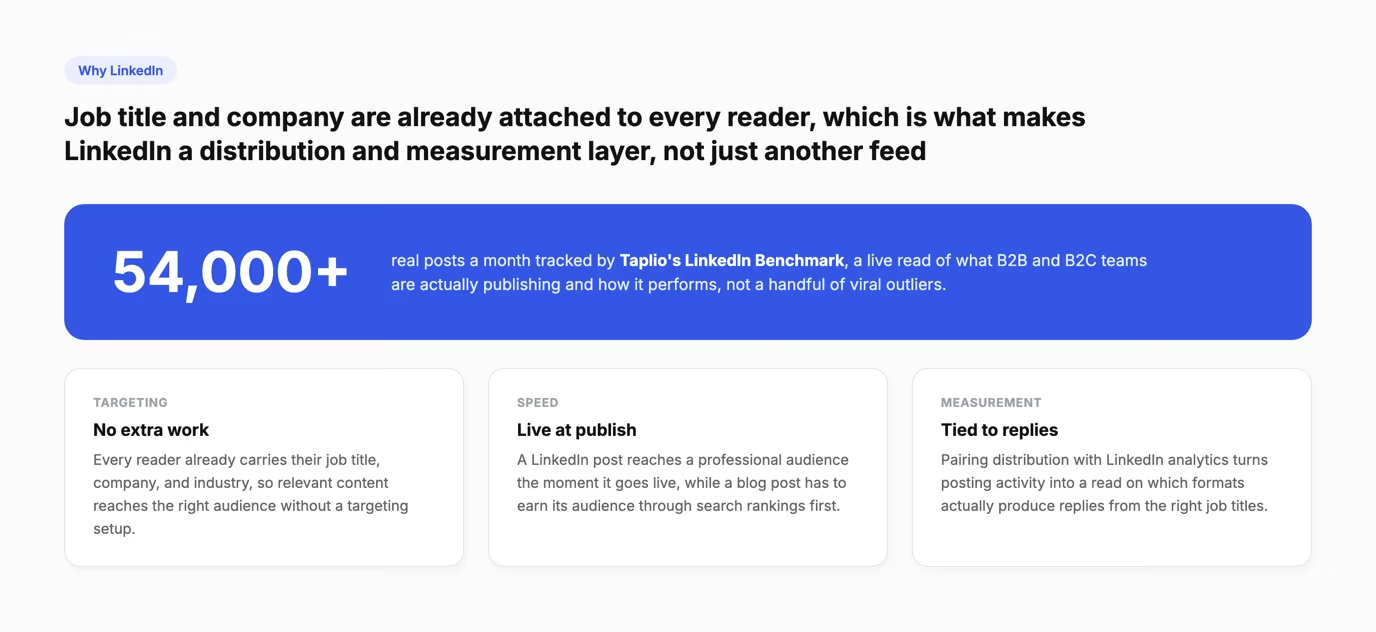
LinkedIn is the highest-leverage channel for B2B content because it is the one place where job title, company, and industry are already attached to every reader, so content reaches the exact audience a B2B strategy is built for without extra targeting work. A blog post has to earn its audience through search rankings built up over months; a LinkedIn post can reach a relevant, professional audience the moment it is published, before any search engine has even indexed it.
Taplio's LinkedIn Benchmark tracks 54,000+ real posts a month across formats to show what is actually being published and how it performs, which is a useful reality check against advice based on a handful of viral outliers screenshotted out of context. The point of watching a corpus that size is not to copy one format blindly, it is to see the real spread of what gets published before deciding what to test with your own account.
Distribution only pays off if it is measured. Pairing a LinkedIn-first content plan with LinkedIn analytics is what turns "we post regularly" into "these three post types produce replies from the right job titles," which is the actual goal of a B2B content strategy, not the posting itself.
This works best for teams that build their whole content motion around the channel, rather than treating it as a repost destination for whatever the blog already published. Taplio is built for B2B teams that run it that way day to day, from planning through measurement.
There is also a compounding effect specific to LinkedIn that a blog does not have. A comment thread, a repost, or a reaction from someone at a target account is visible to that person's own network, so one relevant reply can put a company in front of a second-degree audience that a paid ad would have to pay to reach directly.
B2B content marketing mistakes to avoid
The most common B2B content marketing mistake is publishing for an internal audience instead of the buyer. Content written to please a manager or match a competitor's tone rarely matches what the actual ideal customer profile searches for or scrolls past slowly enough to read.
The second mistake is treating content as a one-time campaign instead of a compounding asset. A single case study or a single LinkedIn post rarely moves a metric on its own; a steady weekly cadence sustained over months is what produces a shortlist appearance six weeks later, long after the post itself is forgotten.
The third mistake is skipping distribution entirely. Publishing a whitepaper to a quiet blog and hoping it gets found wastes the research that went into producing it; every piece needs a distribution plan as detailed as its content plan, LinkedIn first, then email, then anywhere else the audience actually spends time.
The fourth mistake is ignoring what the data says works. Teams that never look at which posts actually get replies keep repeating a format that feels right to the person writing it, instead of the one proven to work for their specific audience.
The fifth mistake is writing every piece of content for the top of the funnel and nothing else. A blog stacked with introductory guides but no comparison page, no pricing FAQ, and no case study leaves a warm prospect with nowhere to go right when they are ready to decide.
The sixth mistake is letting one person carry the entire content motion without a repeatable process behind them. When a strategy lives only in one marketer's head, output stops the moment that person is out sick, on leave, or moves to a new role, and the funnel gap shows up weeks later with no obvious cause.
The pattern behind all six is the same: each one substitutes activity for a decision. Deciding who the content is for, which stage it serves, where it gets distributed, and what counts as working is what separates a content program from a publishing habit.
Frequently asked questions
What is B2B content marketing?
B2B content marketing is the practice of creating and distributing content, such as blog posts, case studies, whitepapers, and LinkedIn posts, aimed at other businesses to build trust and generate pipeline over time, rather than triggering a single impulse purchase the way a B2C ad often does. It is published on a recurring schedule rather than as a one-off campaign, because a B2B purchase is researched by several people over weeks or months before anyone contacts a sales rep.
What are some examples of B2B content marketing?
Common examples include case studies built around a named customer result, data-led LinkedIn posts, whitepapers backed by original research, webinars that go deep on one use case, and comparison pages that answer a buyer's last objection before a purchase, each aimed at a different stage of the funnel. The three LinkedIn post patterns rendered earlier in this guide, the data-led hook, the customer-story hook, and the carousel teaser, are working versions of the same idea at the top of the funnel.
What is the rule of 7 in B2B?
The rule of 7 is the marketing principle that a prospect typically needs about seven exposures to a brand before they take action, which is why a single post or a single email rarely converts on its own and consistent, repeated content matters more than any one standout piece. It originated in advertising rather than in B2B research, so treat seven as a reminder that repetition compounds, not as a figure to measure a campaign against.
What are the four types of B2B marketing?
B2B marketing is commonly grouped into content marketing, account-based marketing, digital marketing (search, paid, and social including LinkedIn), and relationship or field marketing built around events and direct outreach, with most B2B teams running a mix of all four rather than relying on one alone. Content marketing is the layer the other three draw on, since an account-based sequence, a paid campaign, and a conference follow-up all need something worth sending.


Keep reading
All articlesRelated Articles
.avif)
Your Linkedin AI coach is waiting for you
Join 12,000+ creators who let their coach turn the blank page into a plan and watch their audience compound.
7-day free trial · 30 day money back · Cancel anytime
AVG. VIEWS
2,979
-1.5%
ENGAGEMENT
3.2%
+0.8%

Free Monthly Report
How does your LinkedIn compare?
Get free monthly benchmarks on reach, engagement, and content format performance.
Get the Benchmark